Categories
Uncategorized

Western North Carolina, Tropical Storm Helene, and Small Business Recovery, Part II: RISK MITIGATION

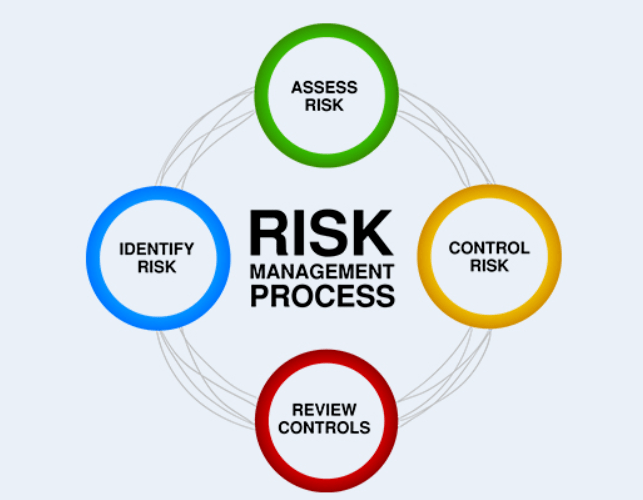
Image Credit: 🔗Risk Mitigation by Shane Howard

Welcome back to the professional student! Last week, I shared my experience living through Tropical Storm Helene in Western North Carolina and offered some insights into small business recovery from a community and economic development perspective.

When disaster strikes, small business owners have limited options:

  1. Rely on insurance (if you have it) to cover some losses.
  2. Seek small business recovery grants.
  3. Dip into personal savings.
  4. Borrow money from family or friends.
  5. Fundraise
  6. Take out a loan.
  7. Close up shop.

After speaking with several small business owners, I’ve noticed a common misconception: Many believe that state or federal aid will step in to save them at the same level as public entities. That simply isn’t the case. Here’s why:

As a small business owner, you are a private entity. Being a private entity means assuming 100% of the risk of operating your business.

While state and federal governments may allocate funds for small business recovery, those funds are limited and not guaranteed. Relying on them as your primary safety net is a mistake.

Risk Mitigation: Your Responsibility

Owning a business isn’t just about selling a product or service—it’s about managing risk to ensure long-term resilience.

Let me be crystal clear: As a small business owner, YOU assume 100% of the risk. Say it out loud. Repeat it until it sticks—before you even consider opening a business.

So, what is risk mitigation? In simple terms, it’s the process of reducing threats to your business and safeguarding its future. Effective risk mitigation means putting controls in place to minimize the impact of unforeseen events.

Your goal should be to reduce that 100% risk as much as possible. For example, a restaurant owner minimizes legal risk by adding a disclaimer to their menu about the dangers of consuming raw or undercooked food. If a customer insists on eating a nearly raw steak and gets sick, that disclaimer helps protect the business. Another key risk mitigation strategy is handling and storing perishable food properly to prevent foodborne illnesses. That is risk mitigation—taking proactive steps to prevent disaster.

Want to learn more about risk mitigation strategies? Click the link below:
🔗 Four Types of Risk Mitigation

The First Line of Defense: Insurance

I recently spoke with a business owner who lost critical equipment due to flooding. Desperate for solutions, they asked for help. My first question: “Have you filed an insurance claim?”

To my shock, they had no commercial insurance.

After digging deeper, I discovered North Carolina doesn’t require all business owners to carry commercial insurance. While that may be legal, it’s also a massive risk.

Would you drive a car without insurance? Some people might, but the smart answer is no. The same applies to running a business.

If you cannot afford to protect yourself, your employees, and your assets with a commercial insurance policy, you have no business opening a business. Say it again:

👉 I HAVE NO BUSINESS OPENING A BUSINESS IF I CAN’T PAY FOR A COMMERCIAL INSURANCE POLICY TO PROTECT MYSELF, MY EMPLOYEES, AND MY ASSETS.

It’s that simple. Risk management isn’t optional—it’s essential.

Insurance is a basic first line of defense. Stay tuned for part III when I dive even deeper into steps business owners can take to mitigate risk!

Thanks for stopping by The Professional Student. Don’t forget to like, share, and comment!

Categories
Uncategorized

Western North Carolina, Tropical Storm Helene & Small Business Recovery, Part 1

As a resident of Western North Carolina (WNC) working in community and economic development, I have come to know and understand the many unique challenges that both residents and small businesses face, such as the land and unique mountainous terrain, the price and lack of affordable housing, the lack of childcare and affordable childcare, and the cost of living to name a few. I acknowledge that many of these challenges are not unique to WNC and can be universally applied to the country.

So, let me try to paint you a picture of WNC. Most of it is rural, with small populations in each county and municipality that heavily rely on small businesses and tourism to support local economies.

Regardless of the size of some communities, 45% of North Carolina’s GDP comes from Western North Carolina (OSBM Helene Damage Assessment), and 99.6% of North Carolina’s GDP comes from small business owners.

https://www.osbm.nc.gov/hurricane-helene-dna/open

The months of September and October are classified as “peak leaf season,” as many tourists flock to the area to witness the spectacular seasonal change of the trees that fills mountains and hillsides with bright colors of yellow, orange, and red. These tourists typically provide small business owners with about 30% of their annual revenue, enough to sustain them during the slower winter months until tourism picks up again during the spring. There is much more relevance to this, and I’ll get into it further.

There are a total of 100 counties in North Carolina that are rated on a 3-level tier system. Most of WNC is also classified as distressed in accordance with the state’s rating system, which can be found here: https://www.commerce.nc.gov/grants-incentives/county-distress-rankings-tiers

The median income is below the state’s median income of $68,610, and we have a higher population of seniors than the state, requiring a high level of care. For more in-depth details, please feel free to explore this county profile map put together by the NC Rural Center: https://www.ncruralcenter.org/county-data/

Thinking back to late September of 2024, I don’t think anyone could have predicted the magnitude or the impact that Tropical Storm (TS) Helene would have in our region.

I was extremely fortunate, thankful, and grateful to have escaped the storm with no damage other than food loss. Thinking back to that day, I recall being home on Friday, September 27, and the power went out at about 8:00 am. Many parts of Western North Carolina had already received 6-10 inches of rain the day before the implications of TS Helene, which set the stage for the disastrous events that followed. The ground became over-saturated with water from a different storm system the day before, and the surrounding bodies of water had already risen or flooded.

I was calm when the power went out. I thought I was prepared and ready. I was not. No one was. No amount of warning could have prepared the citizens of the disaster-declared counties for what was to come. Shortly after the power went out, all cell phone communication was lost, and there was no internet access. I was in the dark, literally and figuratively. Having no idea what was happening and inability to find out sent me into panic mode. I made preparations to leave until it was suitable to come back, which ended up being almost 3 weeks later when the electricity was restored.

I remember waking up early on Saturday, loading my car, and heading out into the unknown. A typical 3-hour drive took almost 6 hours, and I had to drive well over 120 miles before I could get a glimmer of cell phone reception. Every small town that I drove through was also without electricity. Homes were ravaged and destroyed, and I witnessed the entire River Arts District underwater while driving out of Asheville. I saw homes and vehicles with trees lying across them. I saw a whole section of the interstate closed from a mudslide in Black Mountain, which caused a reroute from 70 to 26 for myself and many others trying to leave the city. I saw people, blanked-faced, wandering the streets in a state of panic and confusion, trying to figure out where to go or what to do. It was the equivalent of the zombie apocalypse minus the zombies. I don’t know how else to explain it.

I watched the chaos unfold from afar and kept my neighbors and friends up-to-date as much as I could via text messages who had chosen to stay in their homes but did not have internet access. Leaving my home left me with a feeling of guilt, but I soon realized that I was one less person in the area to take away from the resources that were desperately needed by those who had lost everything.

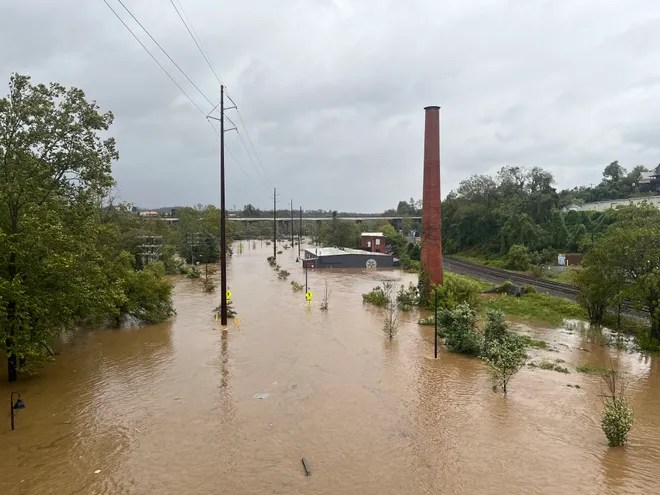
Here is a view of what I saw driving out of Asheville on Saturday, the 28th. The French Broad River reached over 16 feet by 11 am covering most of the River Arts District, seen here from the Haywood Road bridge. Photo Source: Jacob Biba/Asheville Citizen-Times: https://www.citizen-times.com/picture-gallery/news/local/2024/09/29/river-arts-district-asheville-flooding/75442009007/

WNC communities and small businesses were and are still recovering from TS Fred, in addition to small businesses recovering from the COVID-19 global pandemic before TS Helene hit. Most of Fred’s public recovery efforts have been wrapped into the scope of TS Helene’s recovery efforts. Public recovery is a challenge but not the same as private business recovery.

Private business recovery differs significantly from public recovery because business owners assume 100% of the risk. There are few options for small business owners (SBOs) outside of loans or grants (if they can find any). Many SBOs are still paying off loans that supported them throughout the pandemic and cannot borrow more money regardless of the low interest rates offered by the Small Business Administration.

So, what was the first problem? As I said before, small businesses earn approximately 30% of their annual revenue during September and October, peak leaf season. The revenue earned during peak leaf season carries SBOs to spring when tourism picks up again. Just because communities were located in disaster-declared counties does not equate to them being closed for business. They had the capacity to handle economic activities derived from tourism.

The former Governor of North Carolina, Roy Cooper, declared WNC closed for business and announced to tourists, “We don’t want you here.” Naturally, people stopped coming. https://www.citizen-times.com/story/news/local/2024/10/03/nc-gov-cooper-to-tourists-after-helene-we-dont-want-you-here/75494195007/

I understand the implications that were caused to all of the roads in Western North Carolina and the need for roadways to be free for emergency responders and trucks bringing in aid. Still, at the same time, small, rural, distressed communities that were not impacted or minimally impacted that could host tourists were unintentionally crippled through the actions of the former Governor. The intentions were good, but the delivery was terrible and should have been much more precise regarding what was closed to tourism and who was open.

What’s the second problem? At the time, the Small Business Administration (SBA) ran out of funds for the year and could not provide disaster relief loans in a timely manner. https://www.sba.gov/article/2024/10/15/sba-exhausts-funds-new-disaster-loans

So, let’s say a business owner filed an insurance claim, and like most insurance claims, there was a partial or complete denial. Now, the business owner turns to the SBA, and there is no money. What are they supposed to do? The harsh reality is that many had to close their shops, pack up, and leave the state. Their employees and the owners are out of work, the local economy is affected, and the entirety of North Carolina is affected.

Thanks for stopping by The Professional Student! Part 2 will follow shortly, but please let me know your thoughts, especially if you’re a local resident of Western North Carolina.

Categories
Uncategorized

Principled Entrepreneurship: Triple Threats & Why You Need Them

The triple threat entrepreneur: creative, managerial, and financially savvy. Does such a thing exist? I was told no by an experienced professional, which is wrong. If you’re an entrepreneur or think you’re well versed in entrepreneurship, step 1, the most obvious, is always retaining an open and growth mindset. You might as well hang up the towel and retire when you become fixed.

Where are the triple threats hiding? In plain sight. Yes, I am referring to myself right now, but I know I am not the only entrepreneur who excels in all three areas. You should meet some of my classmates. They’re amazing!

Is that a bold statement to make? Maybe, but I can guarantee you, based on my diverse background as an Army veteran, pastry chef, and a small business owner paired with education, the statement isn’t so bold. Do triple threats take much time to develop? YES! Do they happen overnight? NO! Are many mistakes and life lessons required for success? YES!

For more context, I double majored in Management and Innovative Leadership and Entrepreneurship during undergraduate school with a 3.91 GPA while holding a 4.0 GPA in a Master of Entrepreneurship program with an Innovative Leadership concentration. The triple threat is real. The curriculum at Western Carolina University is set up to produce top triple-threat entrepreneurs, should one apply themselves enough. If you don’t believe me, meet the professors and take one of their courses.

Why am I talking about this? Funny story. Recently, I was at an event listening to a speaker discuss the importance of entrepreneurship and economic development. A few things stood out, good and bad, so I MUST write this post. Let’s backtrack a little first and get into some definitions.

What is an entrepreneur? According to Google’s English dictionary provided by Oxford Languages, the word entrepreneur is derived from two words. The French word entreprendre means undertake, or in this case, undertaking a project, and the English word enterprise, which means a project or undertaking, typically one that is difficult or requires effort. Similarly, initiative, resourcefulness, a business or company, and entrepreneurial economic activity are listed below.

But what really is an entrepreneur? Simply put, an entrepreneur can capture the value from an idea to create or improve products, services, or processes and generate a profit.

What is principled entrepreneurship? There are a lot of different versions, but the one that resonates the most with me is principled entrepreneurship, which is the discipline of always practicing entrepreneurship in a principled manner. That is vague, so let’s dive into what “principled manner” means. Principled entrepreneurship equates to evidence-based entrepreneurship. Evidence means real, factual data from real, reliable sources.

Myth: Only people born with entrepreneurial traits will be successful entrepreneurs. Fact: Entrepreneurship is a principled discipline that can be taught and learned. Entrepreneurial skills are not innate. Practice, seek like-minded scholars, practice more, improve, and succeed. Myth: Entrepreneurs are a specific set of people with particular demographics. Fact: Anyone can be an entrepreneur. Whether you’re Gen Alpha, Gen Z, Millennial, Gen X, or a Boomer doesn’t matter. It doesn’t matter if you’re 80 and making 15K a month using TikTok as an influencer or 8 making 15K on YouTube playing with Legos. It doesn’t matter if you make flowerpots out of recycled cans. Maybe you’re a teenage girl with a skincare line (one of my professor’s children). You are an entrepreneur.

Another perception that is very wrong regarding entrepreneurship is that many people view it as taking significant risks, which is part of it. No one in the right mind decides it’s a good idea to blow their life savings or take out another mortgage on their home for fun to pursue an entrepreneurial venture, knowing they could end up on the streets. Evidence-based principled entrepreneurship dramatically reduces risks associated with innovations, services, products, and business ventures because there is strong evidence in a business case to evolve a business model and end with a strong business plan to back the pursuit of such things. Risks are taken, but they’re calculated risks, and typically, it is riskier than a traditional corporation that is only concerned about the status quo.

So, why do you need triple-treat entrepreneurs in your community? Because most leaders and elected officials are not subject matter experts in entrepreneurship. They might have an idea or be well-versed, but that isn’t enough.

Coining the phrase “triple-threat entrepreneur” shouldn’t be misleading or harmful. We love to help people and communities! That said, not all entrepreneurs and business owners are triple threats. Not all can be creative, managerial, and financially savvy. And that’s okay!

Triple-threats bridge the gap and fill in the spaces to uplift other entrepreneurs. In this case, I am referring to rural communities where economic development is much more challenging than an urbanized environment. That goes without saying, hire the triple-threats in the city to help solve urban economic development issues.

The speaker made a good point. Entrepreneurs enjoy staying in their communities. I made it a point to mention how good the program was at Western Carolina University, and I was quickly informed that the University where the event was held also had a good program, which wasn’t the point. The speaker failed to make the correlation between rural economic development and Western Carolina University. My point wasn’t to see who could throw the biggest stone, but I kept silent and saved it for this post.

Western North Carolina, not including Asheville, is all rural. Western Carolina University is in a stunningly beautiful rural community. Western Carolina University PRODUCES triple-threat entrepreneurs at the graduate level. Do you see the pattern? Use your universities, their programs, and their environments to meet your specific community’s economic development needs.

Do not discount the intrapreneur, which goes hand in hand with any subject matter expert entrepreneur. Principled intrapreneurship drives and leads innovation within existing corporations. Do you want to see change managers? No one can manage change or drive innovation harder than an experienced intrapreneur. Do you need a culture shift? A new process for better efficiencies? Given your organizational values and goals, do you need to know the difference between a good idea and a bad one? Let’s keep it simple…Do you want to learn how to innovate and set up a strategic innovation plan? Hire a subject matter expert intrapreneur and keep an open mind because we are not here to tell you what you want to hear. We are here to tell you what the facts and evidence say.

Let’s go back to the speaker event. The theme of the week was economic development. The speaker was referring to economic development and the roles entrepreneurs play. Aside from the obvious, which is investing in communities, creating businesses, and creating jobs, triple-threat entrepreneurs do not see the world the same as you. A subject matter expert entrepreneur with a formal education can and will help communities with solutions to problems regarding economic development and anything they’re asked to do, should they be implored to do so. So, IMPLORE THEM! Stop waiting around. Do you want to meet someone with passion and drive that is impossible? Seek out your triple-threats. Change your perception of what you think an entrepreneur is vs. what a principled entrepreneur is.

Aside from imploring entrepreneurship and subject matter experts, FOSTER, INCLUDE, and CELEBRATE entrepreneurship within your community at the local government level and above! There are more small business owners and entrepreneurs than large corporations, and both play an essential role.

Thanks for stopping by The Professional Student, and I hope you enjoyed the read! I look forward to reading your comments and feedback.

Resources

The home of Language Data. Oxford Languages. (2024). https://languages.oup.com/

Kim, S., & Kim, A. (2022, January 17). Research: How entrepreneurship can revitalize local communities. Harvard Business Review. https://hbr.org/2022/01/research-how-entrepreneurship-can-revitalize-local-communities

Principled entrepreneurship. Koch. (2024). https://principlebasedmanagement.com/principles-in-brief/principled-entrepreneurship-#:~:text=Principled%20EntrepreneurshipTM%20is%20the,acting%20lawfully%20and%20with%20integrity.

Categories
Uncategorized

Final Thoughts: Americana A 400-Year History of American Capitalism by Bhu Srinivasan

Welcome back to The Professional Student! Today, I would like to take some time just to reflect on the previous 6 blogs. I don’t think I knew what I was getting into with the book I chose to do my reflection posts on, but I am a history fan.

History is one of those things that I love to study, especially food history. Many major brands still in existence can be traced back to the early 1900s when food manufacturing was starting to take off. Henry Ford pioneered the assembly line and the McDonald brothers were able to take what Ford did and apply it to their fast food model after they got out of the bbq business and switched over to what we know them for; burgers. McDonald’s still makes fast food, but in actuality, they’re a real estate firm. Franchisees might own the business, but corporate owns the land.

Wars are another area that I enjoy studying, having served myself and having a father (Vietnam), a grandfather (WWII), and a great-grandfather (WWI) who served. More recently, my nephew became a Marine about a year ago, so there is a family history of military service. Aside from the historical significance of historic wars, they cost money and they can make money. I can speak from my own personal experience having been in charge of running food service operations at smaller bases with about 150 personal eating three meals a day plus drinks, snacks, water, produce, etc., the cost is astronomical. I easily spent $15,000 to $25,000+ per week on food orders. Fast forward a full year and that number can reach or exceed $1,000,000.

Reading Americana, A 400-Year History of American Capitalism made me look at everything historically I already knew from a different perspective; the perspective of the dollar. Pilgrims made the journey over on The Mayflower chartered by The Virginia Company seeking religious freedom, which they got in exchange for 7 years of service loading ships up with goods to be sold for profit in Great Britain. Unfortunately for the Virginia Company, there were not able to stay in business to ever reap any fruits of their labor.

What is bad for one company is good for another, and the pilgrims were able to capitalize on tobacco and cotton, among other things, to turn a profit. So, while religious freedom might be the first founding principle of The United States, capitalism comes in for a strong second.

With that being said, no system is perfect. Is it capitalism to blame, the government, consumerism, or the tax code? Or, is it the devil in people that gets the best of us when blinded by prospects of amassing huge fortunes and wealth? Perhaps a combination of all. At the end of the day, money must be spent to make more. You can’t take it with you and a person only needs so much.

I will let you think about capitalism and what it means to you and end here. What is the future of the United States? Will the wealth gap keep getting larger? Will the American Dream disappear? Will we uplift each other as a society, or let those who can’t swim sink and drown? Will equality be achieved for everyone in the land of the free. Free until you don’t pay your income taxes, of course. Free so that the money you’re left with after taxes can continually get taxed over and over again until there is nothing left but fat pockets for some and empty pockets for others.

Categories
Uncategorized

Wrapping Things Up: Americana A 400-Year History of American Capitalism by Bhu Srinivasan

Welcome back to The Professional Student, and thanks for stopping by to check out my book review! Reaching the end has been a long journey, but we are almost there.


During my last post, I left with baby boomers and a booming economy, but those were not the only things booming! The middle class was also booming, and television became the center of American homes. Families expanded, the population grew, and the need for affordable housing increased suburban growth. For many, living in the suburbs is the American Dream, as owning a home becomes a reality that gives families an opportunity for a better quality of life.


It is interesting to think about this booming time of economic prosperity and the vision of the American Dream as it has disappeared from America. It may not have disappeared, but it has become challenging to achieve. Look to France for reference on their full-time structure. We can do better.


Is it a dream if you’re a slave to corporate America and have zero time to enjoy your home in the suburbs? Is it a dream when you work yourself to death from physical and mental exhaustion? Is it a dream when you miss your children growing up? Is it a dream to dig yourself into debt to achieve higher education and receive medical care? What is the new “American Dream?” Home prices have doubled in my neighborhood since 2020. I couldn’t afford to buy another house if I had to move. That’s the reality of the American Dream, but I’ll count my blessings every day and am thankful for everything, but what about those who will never experience the American Dream? Do they get left behind to sink or swim? There must be a better way to lift everyone and make the American Dream achievable.


I’ve digressed, but I needed to say that: back to the book. Wars are not over, and following the invention of nuclear weapons, they set in motion an arms race as other nations wanted to achieve the same technology. Que The Cold War, communism, and the space race! As I’ve mentioned, a lot can come out of wars. Though The Cold War wasn’t a war in the traditional sense, it was a time of extreme tension with the looming possibility of nuclear war between the United States and the Soviet Union and their respective allies from 1947 through 1991 until the fall of the Soviet Union.


Other wars followed suit after World War II that I don’t entirely need to get into, such as the Korean War, Vietnam, the Gulf War, and, in the near future, Operation Iraqi Freedom and Operation Enduring Freedom (Afghanistan). Are you seeing the trend here? America goes to war on what appears to be a regular basis, but as I’ve mentioned, wars cost money and make money. Capitalism.


In the meantime, the United States and Russia were also competing to get the first man on the moon in 1969 when Neil Armstrong stepped out to walk on the moon. Thinking about space now and Elon Musk’s Space X vision to make space travel affordable and environmentally friendly so that humans can become a multi-planetary species doesn’t seem too far off with how fast technology advances and progresses, maybe not in our lifetime, but certainly in the next.


The 60s and 70s were a wild time for civil rights and social change that focused on racial equality and justice, and I think about it. I think about all the pot smoking and LSD people were dropping. I think about everything that has happened, and here we are, 54 years into the future from 1970, and we are still struggling with racial equality and justice in America. At some point, white people will be the minority in America. The “majority-minority” point arrives around 2050 when minority groups comprise 47% of the population (U.S. Department of Commerce, 1999). Will America truly achieve racial equality and justice by that point? I hope so. I’ll be 66, and I’m looking forward to it.


America isn’t done giving birth to technology and innovation. That could be further from the truth, despite her shortfalls with the rise of Silicon Valley. The birth of the internet, Apple, Microsoft, Atari, Oracle, Adobe, Sun Microsystems, and Cisco (Morrison, 2023).


The Industrial Revolution allowed the United States to become a national economy. The rise of Silicon Valley paved the path for the current global economy. As Silicon Valley rose to fame, scandal riddled the nation with Nixon and Watergate. Following Nixon, a few more presidents got elected (Ford, Carter), but let’s talk about Ronald Reagan moving forward.


“Reaganomics” policies focused on cutting taxes, deregulation, and decreasing the role of government in the United States economy. Reagan’s thoughts? Free-market policies equate to innovation and growth. Did it work? There was an economic boom in the 80s, so in the long run, yes, and the effects of Reaganomics still shape capitalism.


The 90s were a transformative time. I learned to type when I was 6 in kindergarten. There was a computer room with old (now) floppy disk Apple computers, and the teacher would tape paper on the keyboard to cover our hands. I have many fond memories of playing The Oregon Trail! More and more homes were getting internet access thanks to dial-up AOL or America On-Line. It was slow but worth the wait, and we didn’t know better. Technology evolves continuously and gets smaller and faster. Our phones are full-blown computer desktop computers in our hands, and the price reflects as such. All these things: television, space travel, nuclear weapons, civil rights, the rise of technology, Reagan, and now Amazon, Tesla, Space X, and Apple are all names I think of to describe just how innovation and capitalism have driven the significant technological advancements in our country.


Is capitalism a double-edged sword? On the one hand, many great things have been created thanks to capitalism, but on the other, does it simply represent the interests of the top 1% while slashing down middle and lower-class citizens, furthering the wealth gap and creating more inequalities? Money must go into the economy to stimulate the economy, and that only happens if people are spending. I’ll end on that note and let you think deeply about capitalism and what it means to you.

References

Morrison, S. (2023). The story of Silicon Valley- How it began, how it boomed, and where its headed. Power and Beyond. https://www.power-and-beyond.com/the-story-of-silicon-valley-how-it-began-how-it-boomed-and-where-its-headed-a-9836fd8f0adf6d3535810e709d99fec3/#:~:text=During%20the%201970s%20and%20the,massive%20influx%20of%20venture%20capital.

Srinivasan, B. (2018). Americana: A 400-year history of American capitalism. Penguin Press.

U.S. Department of Commerce. (1999) Minority Population Growth: 1995 to 2050. Minority Business Development Agency. https://www.mbda.gov/sites/default/files/migrated/files-attachments/MinorityPopulationGrowth1995to2050.pdf

Categories
Uncategorized

The Ups & Downs: Americana A 400-Year History of American Capitalism by Bhu Srinivasan

Welcome back to The Professional Student! I hope you’ve caught up on the previous book review blogs, but if not, no worries. We are going to keep moving forward and talk about a lot of highs and lows.


We’re in the 20th century, and things have progressed rapidly in America. The early years of the 1900s were prosperous, and the country was thriving, but not everything was butterflies and sunshine unless you were in Hollywood. War is looming, not just a typical war, but the First World War because of a conflict between the Allies and the Central Powers.


Millions of men left home to fight, and women filled manufacturing and farming jobs back home, a vast departure from the typical household model. Women also enlisted in various branches of service in jobs usually away from the battlefield but provided direct support to the front lines. The war ended in 1918, and economic prosperity followed, known as The Roaring Twenties. Ironically enough, during this time, prohibition also started (and lasted 13 years) making it illegal to sell, transport, and produce alcoholic beverages.


When there is a demand, there will always be a supply if money is to be made regardless of the law. Bootleggers understood this and risked criminal charges, fines, and jail time, all for the sake of alcohol. The same can be said for illegal drugs and narcotics in America today.

I think we’ve all seen folks who struggle with addiction and many countries have decriminalized drugs. The legalization of illegal drugs could provide an entire new market and tax source. It could also ensure the safety of the ingredients in the drugs without users worrying about what they’re laced with and save lives. I don’t think big pharma would appreciate that as their revenue could decrease. Why spend your money on pain pills from big pharma when you can go purchase what they’re made out of legally?


Aside from bootlegging, The Roaring Twenties was a significant period of economic boom thanks to technology that allowed for the mass production of goods, the electrification of America, mass marketing, cheap credit, and more job creation. There were automobiles, television, and electricity. Things were looking up until they weren’t.


On Black Thursday, October 24, 1929, the stock market crashed. Millions of shares were sold by investors who lost faith in the economy. The panic spread beyond investors to regular working-class citizens running to the banks to withdraw all their cash before they collapsed. Not everyone made it. Life savings were lost, retirement funds were lost, businesses crashed and could not operate, and people lost jobs, homes, cars, and livelihoods.


Several banks crashed over the past few years, such as First Republic Bank, Signature Bank, Silicon Valley Bank, and Almena State Bank. These “niche” banks were not federally insured, meaning deposits and risky mortgage lending practices were not protected. Since 2001, 567 banks have failed (FDIC, 2024. What is the lesson here? Make sure your accounts and deposits are federally insured! Maybe keep some cash at home in a shoe box, too. I also remember the housing market crash in 2007, thanks to Fannie Mae and Freddie Mac. The current economy is also questionable, and some sources believe another depression will start in 2030, lasting well into 2036 (ITR Economics, 2023).


Roosevelt created The New Deal to help get America out of The Great Depression by introducing programs such as public work projects, financial reform, and federal regulations. The New Deal helped, but was it what pulled us out of The Great Depression, or was it World War II?

The Great Depression ended in 1939, the same year World War II started between the Allies and the Axis powers. Millions of men were drafted into military service, and millions of new jobs were created in the defense and war industries. As an Army veteran, wars are a terrible thing to witness, but they’re also very profitable, depending on which side of the line you’re on.


World War II saw many things, but most significantly, the creation of nuclear weapons in America. These weapons of mass destruction forever changed the face of the planet when two atomic bombs were horrifically dropped on Hiroshima and Nagasaki in Japan, ultimately ending the war, which led to another great period of economic boom that was driven by increased government spending. And a baby boom or boomers, as we like to say!

References

FDIC (2024). Bank Failures in Brief- Summary. https://www.fdic.gov/resources/resolutions/bank-failures/in-brief/index.html

ITR Economics (2023). Why Awareness of the Comming Great Depression Is Vital for Success in the 2030s. https://blog.itreconomics.com/blog/why-awareness-of-coming-great-depression-is-vital-for-success-in-2030s#:~:text=ITR%20Economics%20is%20projecting%20that,pop%20up%20during%20this%20period.

Srinivasan, B. (2018). Americana: A 400-year history of American capitalism. Penguin Press.

Categories
Uncategorized

Urbanization, Corporate America, and Federal Regulations: Americana A 400-Year History of American Capitalism by Bhu Srinivasan

Welcome back to The Professional Student! In my previous post, I discussed how America’s economy was built off slave labor, the development of the steam engine, the beginning of the Industrial Revolution, the American Civil War, and more innovations that changed and reshaped the American landscape.


Moving into part 2 of the book, there is a deeper dive into the progression of the Industrial Revolution. I briefly mentioned the telegraph, revolutionizing long-distance communication using undersea cables and radio circuits. Imagine how this affected the stock market and trading stocks in general, as well as other industries, like the expansion of the railroads, newspapers, and how rapidly they could report stories and other businesses, thanks to Samuel Morse. Morse invented the telegraph and Morse code. Morse code is a series of beeps, pauses, or dots and dashes, representing the alphabet and numbers 0 through 9.


Morse code is still used today and can be lifesaving in emergencies. My uncle Wayne progressively went blind and deaf as a child. This was back in the 40s and 50s, and times were different. Many people ended up in asylums or got lobotomized who were disabled. He was able to learn to speak and learn Morse code before he went fully blind and deaf. Fast forward to the late 90s. He got a laptop with inserts for his hands where he could push on the side of the inserts to make dots and dashes. As he got older, he lost his fine motor skills, which was necessary. The inserts were plugged into the laptop, and the headphone jack was plugged into his hearing aid. He could hear the dots and dashes, and the computer relayed whatever was typed in the program back to him in Morse code. When he responded, the computer translated his dots and dashes into words. This seems simple now, but it was a massive advancement at the time. Before that, we wrote letters into his hand, and he could speak, but you wouldn’t understand what he was saying if you didn’t know him.


Previously, I mentioned Vanderbilt, who we know for the railroad consolidation and ownership in America, but let’s talk about another man, Leland Stanford. Yes, the very one in which Stanford University was founded. In proper American pomp, Leland completed the first transcontinental railroad with the tap of a mallet on a golden ceremonial spike. He was part of the “Big Four” who built the railroad: Huntington, Hopkins, and Crocker. This massive project helped drive economic growth by integrating regional markets into a national market. The cost of transporting goods was reduced, and new opportunities for business opened.


Carnegie’s grip and monopoly on the steel industry led him to become one of the wealthiest men of his time, with a peak wealth of around $350 million. Adjusted for inflation, that would be $350 to $375 billion, making him wealthier than Elon Musk and Jeff Bezos. Besides his wealth, the monopoly he had also sparked the government to step in and develop antitrust laws and regulations to curb monopolistic practices and ensure fair trade. The labor behind these operations was also being worked to death. Literally, and now I present the unionization of American laborers.


With all the industrialization taking place, cities grew, and urbanization emerged. People no longer farmed their land. They flocked to the cities for jobs to live the “American Dream.” Food could be produced at an accelerated rate, harvested, and shipped into the city where folks could purchase it. The farming methods being used led to problems down the road. Instead of diverse farmlands with many varieties, one crop was planted in a large area. Different crops take out different nutrients in the soil that must be replenished, or the land becomes barren. Cover crops can be planted in the off-season and tilled into the soil to decompose or enriched with fertilizers and manure. That’s animal or chicken poop if you didn’t know. Another alternative is crop rotation.


Have you heard of The Dust Bowl during The Great Depression? It was caused by draughts and unsustainable farming practices, like growing the same crop year after year without soil enrichment or rotation. We know better now. Well, we knew better before because the practice of crop rotation is older than Jesus, but why would a farmer grow a less profitable crop if he could make more money growing the same thing repeatedly? Capitalism.

References

Srinivasan, B. (2018). Americana: A 400-year history of American capitalism. Penguin Press.

Categories
Uncategorized

The Shaping: Americana A 400-Year History of American Capitalism by Bhu Srinivasan

Welcome back to The Professional Student. Today, I’ll be posting a few different entries to catch up on the reading I’ve been doing over the weeks, as I’ve enjoyed engulfing myself in the pages of the book.


Moving past the colonization of America, the book progresses from the popularity and successful farming of tobacco to The American Revolution, the cotton industry, and the slave labor that was used to make those two industries successful.


The Thirteen Colonies won their independence from Great Britain and, ironically enough, used African slave labor to reap the economic benefits produced by tobacco and cotton farming. It is no surprise, considering how the indigenous people of America were slaughtered in genocide.


The past of America is not pretty or pleasant. Still, we must continue to study it, learn from it, acknowledge it and privilege, and move forward if a genuinely equal society is ever going to emerge where all people, regardless of race, religion, culture, ethnicity, gender, and sexual orientation, are treated the same. It’s ironic how minorities can be discriminated against so openly in the United States, but that discrimination ends when it comes to paying Uncle Sam his tax money. Taxes are what we pay to live in this free country, yet so many are still not afforded the simple freedoms offered here. Tonight, reflect on yourself. Take a deep dive into your upbringing, daily life, personal biases, and reflect. What can you do to become better?


The steam engine was invented in the early stages of the Industrial Revolution. Steam power, usually fueled by burning coal, became the source for machines, boats, and different vehicles that allowed commodities to be mass-produced at a reduced cost. More importantly, thanks to John Fitch, steam engines could now power boats.


Thinking about the early stages of the Industrial Revolution in the late 1700s makes me realize how fast technology has progressed over the past couple of hundred years. I would say even more so now, as the rate at which technology can advance and evolve is staggering and will only continue getting faster. Can we keep up, however? The technological landscape is constantly changing, and businesses must keep adapting, learning, and adjusting to be successful. They must also find people who are technological experts to aid in pursuing whatever each organization defines success as.


It is fascinating to revisit how the traditional family model that involved raising a large family to work the farm and ensure survival transformed into an urbanized landscape with large cities taking full advantage of capitalism to fund business thanks to technology and modern farming techniques. But I am getting ahead of myself.


Following the steam engine came canals, the railroads, the telegraph, the gold rush, and the American Civil War, which was sparked over slavery ending. I also want to acknowledge the industrial fathers of America, Cornelius Vanderbilt, John D. Rockefeller, Andrew Carnegie, J.P. Morgan, and Henry Ford. All these names should be recognizable on some level as they truly encompassed innovation, capitalism, and the overall “American Dream.”


Vanderbilt started with steamships and ended with railroads. Carnegie owned the steel industry. Rockefeller founded Standard Oil and ruthlessly destroyed competition to create a monopoly in the oil industry. Morgan bought and reorganized businesses to make them profitable and stable. Maybe he was the first venture capitalist? Random food for thought. And we all know what Henry Ford did. Though he did not invent the assembly line, he streamlined the process with Model T production and enabled other businesses to do the same.

References

Srinivasan, B. (2018). Americana: A 400-year history of American capitalism. Penguin Press.

Categories
Uncategorized

Diving In: Americana A 400-Year History of American Capitalism By Bhu Srinivasan

Moving forward into the book’s first four chapters, I was quickly reminded of the history behind the United States and how it came about. Most of us know the story of the pilgrims coming over on the Mayflower. Still, I was fascinated to learn that the pilgrims were religious people who had left England and went to Holland to practice their religion, as they could not do so under British monarchy rule. They wanted to leave Holland because they feared the unholy influence the country would have on the young and were deemed to be worthy of credit based on their religious standing. The closer to God you were, the better your “credit” was.

The Mayflower was owned by The Virginia Company based out of London. The Virginia Company was formed in 1606 with permission from the newly crowned King James I after a failed attempt to colonize America in the 1580s in present-day North Carolina.

True to its name, The Virginia Company owned Jamestown, Virginia, the first colony in the United States, to colonize America for profits by bringing back resources and riches to England. Shares of stock were sold with the promise of high returns to shareholders. Money raised from selling stocks was used to fill three ships with supplies and 144 “settlers” to build and establish Jamestown (U.S. Department of Interior, 2024).

Here is the kicker: settlers were more like indentured servants working for freedom. The Virginia Company owned them, as they had to work for seven years with the promise of owning their land. They were charged with gathering the resources to be sold for seven years. All orders were taken from The Virginia Company employees, and all materials and supplies were provided to the settlers.

Unfortunately, The Virginia Company was a colossal flop that had to be bailed out time and time again by The Crown, and its charter was revoked after 17 years. Settlers died at accelerated rates from famine, lack of supplies, disease, cold winters, and attacks from the indigenous people.

The pilgrims that we know from The Mayflower were supposed to end up in Jamestown, but there were many delays caused by the change of terms to their contract by The Virginia Company, which they protested. Eventually, an agreement was reached, but the delay caused them to arrive in November, not at their destination. Instead, they were forced to make provisions for winter at Plymouth Rock, where they ended up settling a new colony.

When The Virginia Company ceased, an agreement was reached with the pilgrims that in exchange for 1,800 pounds, they would own the land and property in Plymouth Rock when the debt was paid off.

Unfortunately for The Virginia Company, things started taking off in Virginia when smoking tobacco caught on amongst the rich and elite. Virginia’s rich soil was a perfect match for farming tobacco, which could then be sold and sent back to England, allowing the settlers to become profitable.

One thing that caught my attention while reading was that shares were sold. I was curious to know when the first stock exchange was established. I discovered it was in Amsterdam when The Dutch East India Company became the first publicly traded company after they decided to sell stock in exchange for dividends (Hwang, 2024).

Thanks for stopping by The Professional Student, and I hope you enjoyed this week’s blog. Don’t forget to like, repost, and comment!

Resources

Hwang, I. (2024, May 22). A brief history of the stock market. SoFi. https://www.sofi.com/learn/content/history-of-the-stock-market/#:~:text=Who%20Created%20the%20Stock%20Market,Amsterdam%20stock%20exchange%20was%20created.

Srinivasan, B. (2018). Americana: A 400-year history of American capitalism. Penguin Press.

U.S. Department of the Interior. (2024). The Virginia Company of London. National Parks Service. https://www.nps.gov/jame/learn/historyculture/the-virginia-company-of-london.htm#:~:text=The%20Virginia%20Company%20was%20formed,34th%20and%2041st%20northern%20parallel.

Categories
Uncategorized

First Thoughts: Americana, A 400-Year History of American Capitalism By Bhu Srinivasan

Hello, and welcome back to The Professional Student! I’ve been slightly absent from posting as life has been busy, but that is about to change. In the third course of my Master of Entrepreneurship in Innovation Leadership and Entrepreneurship program at WCU, Entrepreneurial Feasibility Analysis, students have been tasked with a book reflection assignment.

The book I’ve chosen, Americana, A 400-Year History of American Capitalism, by Bhu Srinivasan, is written from the author’s perspective as a young child who immigrated to the United States from India. As I began reading the book, one thing that jumped out to me during the introduction was that while the freedoms afforded to the citizens of the United States are nice, the reason why people decide to make a move is to take advantage of the many different ways and opportunities there are to make money.

Bhu describes his childhood living in India during the 80s with his parents, who both had college educations, and he recalls the fact that his family did not have a car. They couldn’t afford it despite his parent’s education and jobs. Having a car, which is something almost every American household has, wasn’t possible. However, they could afford a new refrigerator, which was delivered to their house on a cart pulled by an ox.

Reading and learning about Bhu’s upbringing in India makes me appreciate what most Americans take for granted, such as owning a car, internet access, utilities, smartphones, etc. Many things considered normal are actually luxuries, and I have always had this mentality. Anything extra beyond basic living necessities is a luxury, and self reflecting on that statement can do everyone some good during this difficult time of inflated costs. I didn’t grow up with cable television, internet access at home, or a cell phone. Entertainment was found outside, and I am grateful having been raised as probably one of the last generations to experience life before technology took over.

I clearly remember the day I purchased my first cellphone at almost 20. I was at Fort Lee, Virginia, learning my job skills for the Army. Camera phones had just come out, and it was a Samsung flip phone. I enjoyed it until it got taken away by a Drill Sergeant because I wasn’t supposed to have it during part of my military training! A lot has changed, and I think the newer generation of military folks are allowed to have cell phones.

Thanks for stopping by The Professional Student. I hope you enjoyed the beginning of my book reflection, and please don’t forget to like, comment, or reblog.

References

Srinivasan, B. (2018). Americana: A 400-year history of American capitalism. Penguin Press.