Categories
Uncategorized

The Art of Black Buttercream

Welcome back to The Professional Student. Today, I want to dive into another baking edition post and offer tips on making black buttercream and coloring buttercream. I recently made the cake pictured above, and I love the dramatic effect of black buttercream against the gold! The cake is 4 layers of dark chocolate buttermilk cake layered with dark chocolate ganache and a fresh strawberry filling. The buttercream is a dark chocolate Italian meringue.

Coloring buttercream is a challenge, let alone making one of the hardest colors, black. Over the years, I have picked up some tricks and tips that have helped me achieve the colors I want, and I would like to share those with you!

For black buttercream:

  1. Always use a gel-based food coloring, as they are super concentrated.
  2. It is much easier to color chocolate buttercream black than regular white vanilla buttercream.
  3. Gradually add the gel food coloring, mix, and continue to add until you get something close to what you want, as the color will darken as it sits.
  4. If you must use vanilla buttercream, color it dark brown first before adding in black.
  5. Color your buttercream the day before you need it, as the color will develop over night and get darker.
  6. If you’re in a rush, a quick zap in the microwave will help develop the color faster. Just don’t melt your buttercream during the process (this works for any color).
  7. To avoid consuming too much colored buttercream, do an uncolored base coat, allow it to chill in the refrigerator, and coat it again with the colored buttercream. This will also prevent the need to make huge amounts of colored buttercream, as gel food coloring is not cheap and ultimately saves you money.

I will include a link to the black gel food coloring I prefer to use from Amazon. As an Amazon affiliate, I am eligible for a small commission based on clicks and purchases. You might not need a bottle this big, but it does last a long time.

https://amzn.to/3wAhs7H

For coloring buttercream:

  1. Always use gel food colors, as they are super concentrated. A little goes a long way.
  2. As previously mentioned, it is best to color buttercream the day before use to allow the color to develop, or you may speed the process up with a quick zap in the microwave, but do not melt your buttercream.
  3. Always color a bit lighter, as the buttercream will darken as it develops.
  4. To make colors that pop a little more, use white gel color first, followed by the desired color. Alternatively, you can purchase “bright” or “neon” food colors.
  5. Use a food gel coloring wheel to make specific colors, as it provides the formulas for the colors and the amounts to use.

I will include a link to “neon” or “bright” food colorings I use and have purchased. These are smaller bottles, but larger bottles, such as the link I posted for black gel color, are available on Amazon. It really depends on your needs. When I was operating my own business, I spent well over $450 just on gel food coloring. They’re expensive, and I think folks who don’t bake might not realize that.

https://amzn.to/4bjKesp

I will also provide an Amazon link for a color wheel food coloring guide.

https://amzn.to/3QNaEdI

I’ve also found for making deeper colors, like a deep red; adding some dark brown can help bring out the red, but not too much, or you’ll have brick red. I believe a deep red and black are two of the hardest colors to achieve, and coloring buttercream is generally tricky.

I hope the tips I have provided and the helpful product links will allow you to easily tackle your next cake or baking project. Thanks for stopping by The Professional Student, and don’t forget to comment, like, and reblog!

Categories
Uncategorized

The Professional Student: Cheesecake Edition

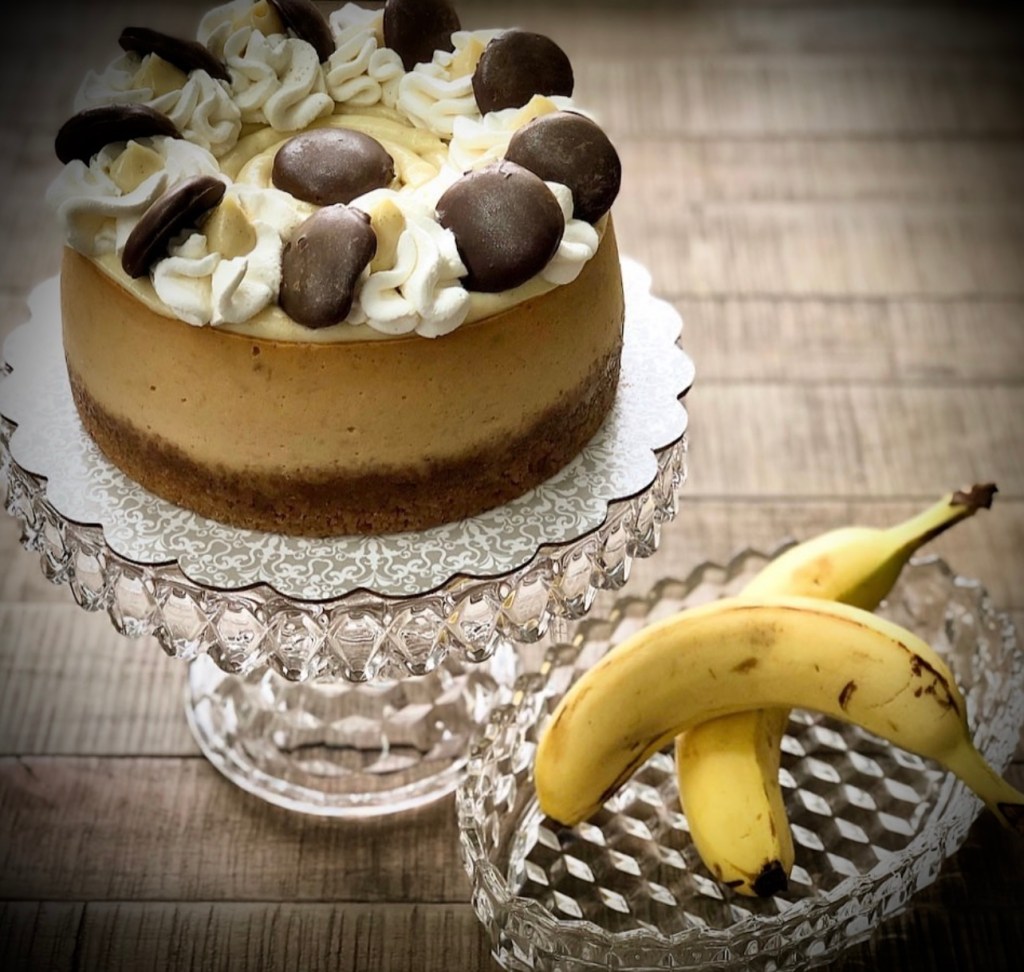
Banana Pudding Cheesecake
Made by Pastry Chef Shawn Smallwood

Cheesecake is one of my all-time favorite desserts to make! I have a tried and true cheesecake base recipe that can be flavored any way you like to create unique, one-of-a-kind desserts.

I don’t take the traditional route of baking cheesecake in a springform pan and a water bath. Instead, I prefer using regular cake pans to bake cheesecake at a lower temperature. Baking at a lower temperature eliminates the need for a water bath. After the cheesecake cools down, I flip it out to decorate.

If flipping a cheesecake out of a cake pan feels too overwhelming, please use a springform pan if that is what you are comfortable with. Both types of pan work fine for the method described below.

For this recipe, I prefer an 8-inch cake pan that is 4 inches tall or a 10-inch cake pan that is 4 inches tall.

Cake Pan Preparation

  1. Place the cake pan on parchment paper and trace around the bottom. Cut out the outline to make a parchment paper circle that fits perfectly into the bottom of the pan. Be sure to cut off any marker, pencil, or pen marks, as you don’t want that going into the cheesecake.
  2. Spray a small amount of pan spray into the bottom of the cake pan, and place the parchment paper circle into it. A small spray of pan spray will prevent your parchment paper from shifting around.
  3. Liberally spray the entire inside of the cake pan with pan spray.

Crust Preparation

Ingredients

1 cup graham cracker crumbs

1/4 cup AP flour

1/4 cup brown sugar

1 or 2 TSP ground cinnamon

A dash of salt

1/2 a stick of melted butter

  1. Preheat an oven to 325F.
  2. In a mixing bowl, place 1 cup of graham cracker crumbs. (You may use whatever you like, such as Oreos, shortbread cookies, etc.)
  3. Add in 1/4 cup of AP flour and brown sugar.
  4. Add a dash of salt and 1 or 2 teaspoons of cinnamon, depending on preference.
  5. Pour in 1/2 a stick of melted butter (2 oz).
  6. Whisk the ingredients together until they are sandy in texture, and pour them into the prepared cake pan.
  7. Evenly distribute the crumbs across the bottom of the pan and press them down into a flat and even crust. If there is excess on the edge, press it into the side of the pan to make a lip around the edge.
  8. Bake for 10-12 minutes until golden
  9. Remove from the oven, and leave the oven door open to cool it down.

Basic Cheesecake Recipe

Ingredients

2 1/2 pounds (five 8 ounce packages) of room temp cream cheese

12 ounces granulated sugar

6 whole eggs + 2 yolks at room temp

1/4 cup sour cream

The zest & juice of 1 lemon (optional)

1 TSP salt

1 TBSP vanilla extract or paste (or however much you feel like)

  1. Preheat an oven to 200F.
  2. Combine room-temperature cream cheese, sugar, salt, lemon juice & zest, and vanilla in a stand mixing bowl (or large mixing bowl using a handheld mixer).
  3. Using a paddle attachment, beat the cream cheese and sugar together on medium speed until the cream cheese is completely smooth. Scrape down the sides, paddle attachment, and bottom of the bowl repeatedly to ensure the mixture is smooth.
  4. Add 1 or 2 eggs at a time to the cream cheese mixture and mix on low speed until they’re incorporated. Scrape down the sides and bottom of the bowl, including the paddle attachment, between every addition of eggs to ensure the mixture stays smooth.
  5. Add in the sour cream and mix on low until it is fully incorporated.

Now we have a vanilla cheesecake batter and can proceed to bake or add additional ingredients to flavor the batter. A few ideas could be frozen blueberries, chocolate chips, melted chocolate (for chocolate cheesecake), mashed bananas, swirls of your favorite jam or preserves, raspberries, etc. Get creative, and use your imagination.

Baking

  1. Place the cheesecake in the oven and bake for 4 hours
  2. At hour 4, remove the cheesecake from the oven, and using a food thermometer, insert it into the center of the cheesecake. If the thermometer reads 165-175F, it is done baking. If not, continue to bake until at least 165F is reached.
  3. Allow the cheesecake to fully cool (2-3 hours) and refrigerate overnight, unwraped, in the pan.
  4. Run a knife around the edge of the cheesecake and flip it out onto a cake board that has parchment paper on top. After the cheesecake is out of the pan, you can flip it back over onto a fresh cake board and gently remove the parchment paper to keep the top in tact.
  5. Decorate how you see fit with fresh fruit, sauces, ganache, whipped cream, meringue, etc.

I prefer warming up the cake pan before I flip out the cheesecake. Warming up the pan on the outside helps the cheesecake slide out. You can use a blow torch (easily found at Home Depot for around $20), or you can set the cake pan in a sink full of boiling hot water for a few minutes.

I hope you’ve all enjoyed my basic cheesecake recipe! Thanks for stopping by The Professional Student and don’t forget to leave me a comment.

Categories
Uncategorized

The Professional Student: French Macaron Edition, Method & Recipe

French macarons made by Pastry Chef Shawn Smallwood

French macarons frustrated me as a pastry student 10 years ago when I first began attending Le Cordon Bleu in Dallas, Texas. There is a reason why good French macarons are so expensive. If you’ve never had one, please try one. You won’t regret it!

A love-hate relationship was quickly established, as I loved to eat macarons but hated making them. I forgot about them until I was forced to master them. It was a lot of trial and error, but as an entrepreneur with an entrepreneurial mindset, I persisted nonetheless.

I wanted to share my technique and recipe, and I hope you find both useful, as I have spent a lot of time perfecting these little beauties. If you have ever made a meringue or a meringue-based dessert, you’ll understand just how finicky meringue anything can be.

Please watch my French Macaron tutorial before attempting to make macarons if you are inexperienced and new to baking them.

French Macaron Tutorial

Baking times might vary slightly on what is in the recipe that I typed up vs. what is in my video, as every oven is different. I’ve baked my macarons using how my oven bakes. You might need to increase or possibly decrease your oven baking time, so there might be a little trial and error until you have your macarons mastered.

French macarons baked by Pastry Chef Shawn Smallwood

Most importantly, have fun! It’s okay to mess up batches. Trial and error is part of the process, but believe in yourself, and don’t give up. Get creative with the French Macarons, as decorating is limited to your imagination. Below are some of my favorite French macarons I’ve ever baked.

French macarons made by Pastry Chef Shawn Smallwood

Thanks for stopping by for another baking edition from The Professional Student. Please help support me and my blogging endeavors by subscribing, commenting, liking, sharing, or re-blogging. Thanks again, and have a great day!

Categories
Uncategorized

The Professional Student: Ricotta & Cannoli Cake Edition

Ricotta cheese is one of the rare items I purchase at the grocery store, but I do need it occasionally. Sometimes, for savory applications like ravioli or lasagna, other times for desserts!

I was asked to make an Italian-inspired dessert for a client on this particular day. We discussed various ideas and settled on a cannoli-inspired cake. Cannoli filling is made from ricotta, powdered sugar, vanilla, cinnamon, and chocolate chips. The cake would have four pistachio cake layers and three cannoli filling layers. The outside would be frosted with a buttercream comprised of half cream cheese and half Italian meringue, and finished off with a dark chocolate ganache top, marbled dark chocolate ganache sides, crushed pistachios on top, and a chocolate chip boarder around the bottom.

I noticed no ricotta at the grocery store but plenty of whole milk. I didn’t have time to look for one item, so I grabbed the milk and headed home to make it. The process is simple enough but a little time-consuming when it comes to removing the whey from the cheese. It is well worth it, as the texture and flavor are superior to any grocery store product.

Please enjoy learning to make ricotta cheese with me, as I demonstrate in the YouTube video below. You can also pick up a few gardening tips along the way!

Making Ricotta Cheese Demo

After making the cheese, I needed to bake off the pistachio cakes and turn the ricotta into cannoli filling. Please enjoy the YouTube video of that process. It also includes the recipe I used for the pistachio cake.

Pistachio Cake and Cannoli Filling Demo

Finally, my cake layers had cooled, and it was time to torte, fill, stack, and build the final cake. Depending on thickness, it always takes a few hours for cake layers to cool off, but I don’t mind. It gives me time to work on the homework side of my graduate program!

I’ve noticed some bakers prefer to bake their layers individually so they do not have to cut them. This is a big pet peeve of mine because I do not like thick cake layers. I’ve met people who do not like cake. I truly believe it is because they’ve never actually had a good one. Cake layers should be thin. If the layers are too big and the filling is too thin, the result can be a dry and unpleasant cake. One should not require a large glass of milk, even though it is good with dessert, to prevent a cake choking hazard.

Please enjoy the cannoli cake stacking, filling, and decorating process in the YouTube video below.

Filling and Staking Cake Demo

Thanks for stopping by The Professional Student, and don’t forget to like, re-blog, and comment!

Categories
Uncategorized

The Professional Student: Sourdough Bread Edition

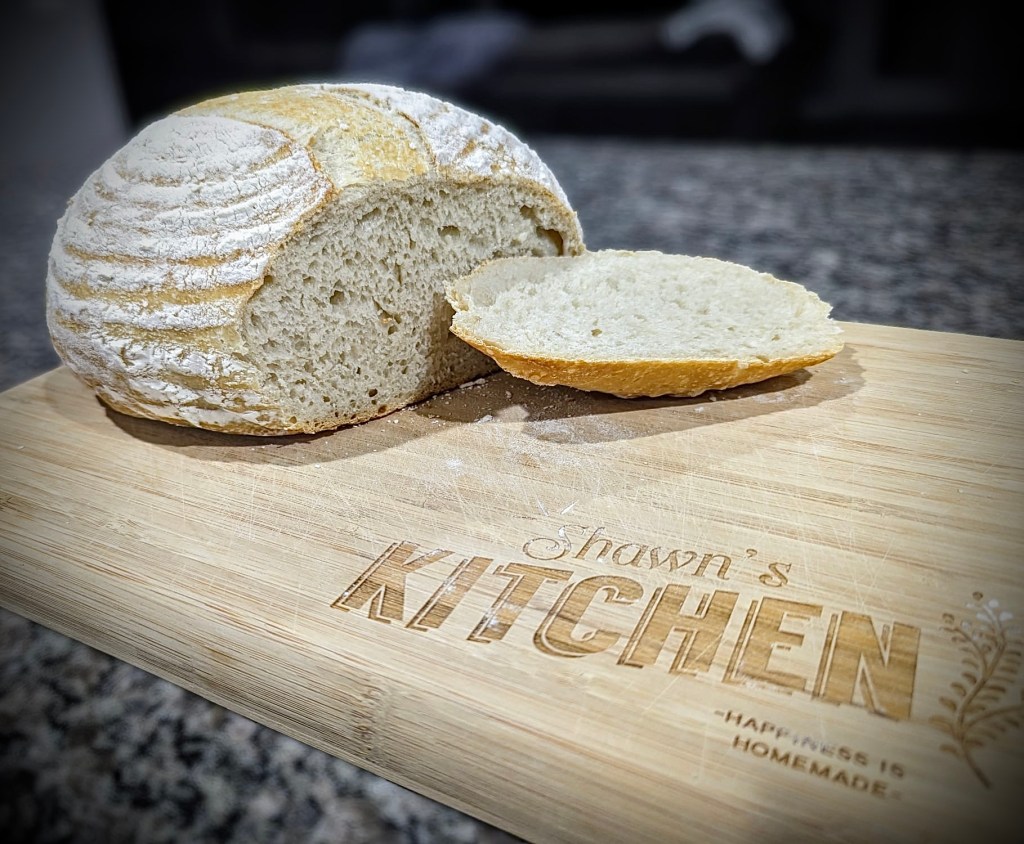
Sourdough bread and breadmaking became very popular during the pandemic when folks were stuck at home. Personally, I love sourdough bread as it has more health benefits than bread leavened with instant yeast.

Yeast is a fungus that feeds off of the sugars in the flour. If you add in a large quantity of instant yeast, it will produce a lot of carbon dioxide quickly. This causes the bread to rise at a rapid rate. The downside is there is still a lot of sugar in the bread, and you lose the benefits of a slower fermentation process, which introduced prebiotics, probiotics, and less sugar. You also get that great sourdough taste!

Here are two interesting studies you may examine on your own.

https://www.ncbi.nlm.nih.gov/pmc/articles/PMC10399781

https://www.ncbi.nlm.nih.gov/pmc/articles/PMC10103004

What I can tell you is that I’ve had the same sourdough starter for two years, and it’s going strong! It can be intimidating to think about making a sourdough starter, so it is often purchased from others. Please enjoy my video tutorial on how to make sourdough starter!

Once you get an established starter, you can keep it in the refrigerator. The cold air slows down the yeast, extending its shelf life. All you need to do is take it out every week or two, discard half of it, and feed it! I’ve even forgotten about it for over a month and brought it back to life. There is no right or wrong way to sourdough, so do what you feel is best.

I’ll also include my basic sourdough bread recipe for your convenience. I hope you enjoyed the video and have found it helpful! Please let me know what you think in the comments, and thanks for visiting The Professional Student!

Basic Sourdough Bread Recipe

Yield: 1 loaf

10 ounces Starter

8 ounces Water

14 ounces Bread Flour

15 grams Kosher Salt

1 Tablespoon Olive Oil (Optional)

  1. Feed the starter the day before baking to ensure it is active and bubbly.
  2. Combine all the ingredients in a stand mixer bowl. If softer bread is preferred, add the oil before mixing. Turn the mixer on low for 5 minutes using the dough hook attachment until the ingredients are combined, or knead the dough by hand.
  3. Turn the mixer speed on high for 10 to 15 minutes until the dough comes together in a smooth ball and lifts off the sides of the bowl.
  4. Transfer the dough to a lightly oiled bowl and allow it to rise until it doubles about 6 to 8 hours.
  5. Turn the dough out onto a lightly floured surface and knead into a smooth round ball. Place the ball into a well-floured bread-proofing basket and cover the top with a damp cloth or wrap it in plastic. An unused shower cap from a dollar store also works. Allow the dough to rise again for about 1.5 to 2 hours or almost double in size.
  6. When the bread is close to being ready to bake, preheat a Dutch oven with the lid in an oven to 400F for 30 to 45 minutes.
  7. Place a piece of parchment paper on the bottom of a sheet pan on top of the breadproofing basket. In one swift motion, flip the basket over and gently remove the basket by lifting it up. If the dough is sticking, give it a gentle shake or two. It can be frustrating, as sometimes the dough won’t come out, so make sure the bread basket is well-floured.
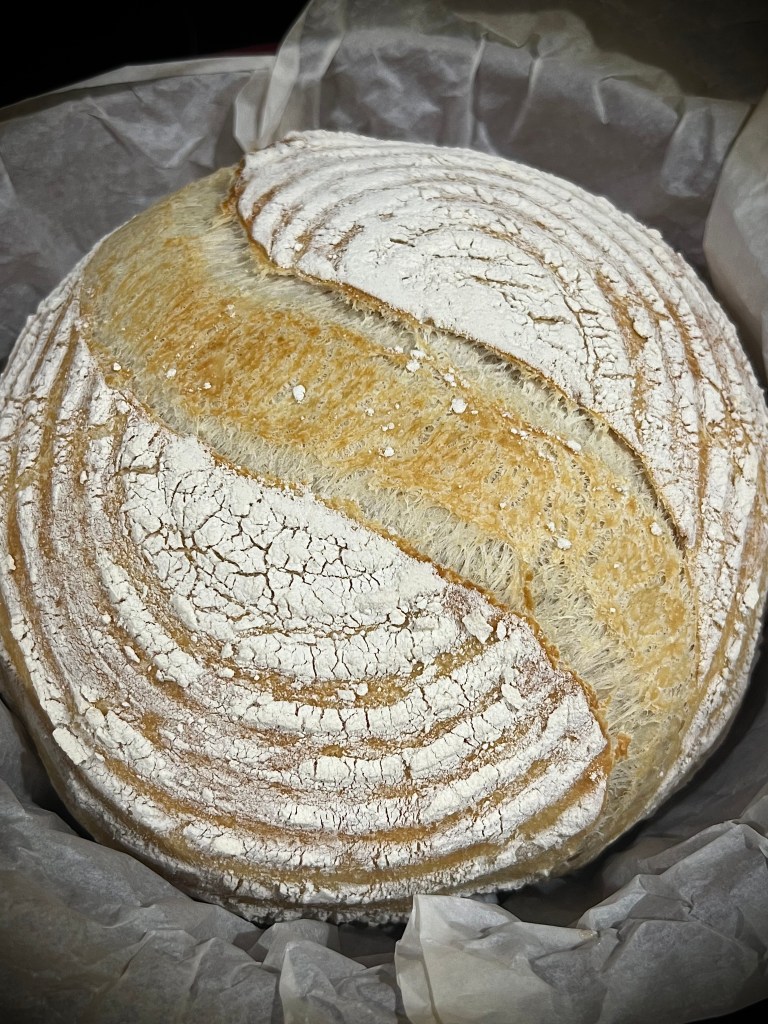
  8. Score the top of the bread. I like to do a deep “S” shape down the center. There are lots of ways to score and design bread. Have fun with it!
  9. Remove the preheated Dutch oven from the oven and pick up the dough by the corners of the parchment paper. Place the dough in the Dutch oven, cover, and bake for 45 minutes.
  10. Remove the lid and bake an additional 10 to 15 minutes until a beautiful golden brown color is achieved.
  11. Once baked, remove the bread from the Dutch oven and transfer it to a cooling rack. Allow the bread to cool before slicing it with a bread knife or storing it in an airtight bag or container. The bread may be cut before it’s completely cool, but you risk smushing the interior. If the bread is warm when storing it in a plastic bag or airtight container, condensation will build up from the steam.

The bread is best served slightly heated or toasted. Leftovers also make great croutons or breakfast casseroles!

Variations

Add in various fresh or dried herbs, spices, or cheeses, and most of all, have fun with it!

Categories
Uncategorized

The Professional Student: Taste of Home Cake Baking Contest Edition

One thing that aspiring chefs or pastry chefs can do to get their names out into the world is to enter magazine baking and cooking contests. Last year, I did just that and entered a cake I created into a Taste of Home Party Cakes Decorating Contest.

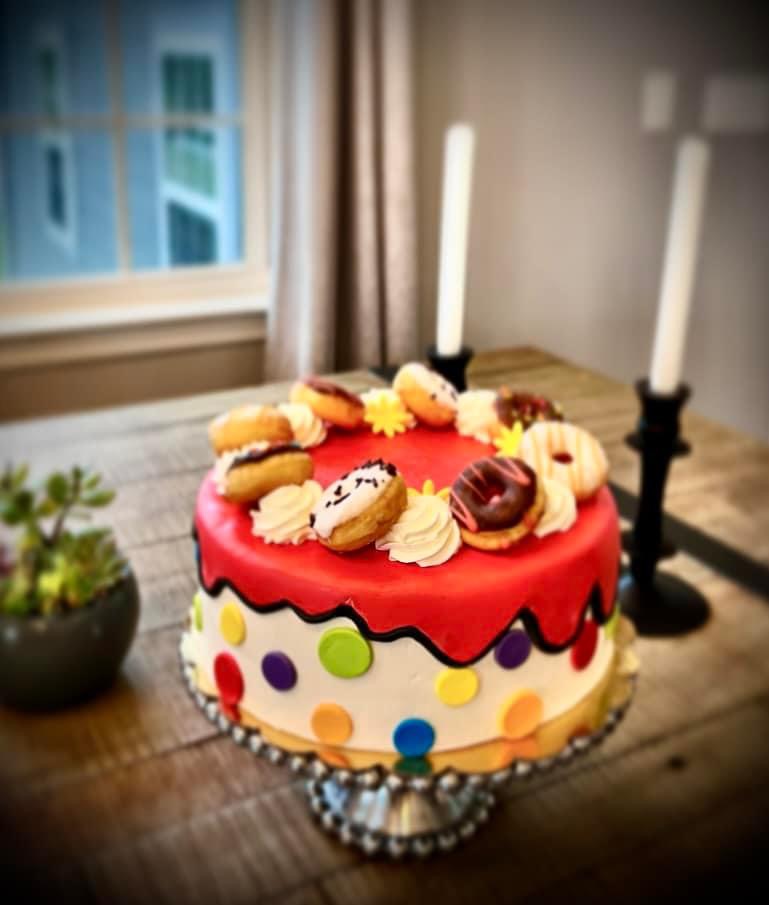
I had no intentions of entering the contest, but a neighbor had contacted me with a special request for her granddaughter’s birthday cake. We decided on a cute donut theme! I looked on the internet to see if any cake contests were taking place, and Taste of Home was having one while I was already making the cake. I decided to go out on a limb and enter, and I ended up winning as a runner-up, winning a $250 prize.

Cartoon-style cakes had just become very popular then, and I wanted to do a variation on one using my style. I chose a seven-layer white cake with Italian meringue buttercream and homemade strawberry jam filling. There were four layers of cake with three layers of strawberry jam filling. I decorated it by covering it in white fondant with multi-colored polka dots, a red top outlined in black, and adorable mini donuts!

I’m glad I decided to challenge myself. Aside from the cake, I had to submit an entire video of me making it from start to finish and all the recipes I used.

Taste of Home Entry

Here is a link to the full article in Taste of Home.

https://www.tasteofhome.com/article/party-cakes-contest/

Categories
Uncategorized

The Professional Student: Pastry Chef Editon

Welcome back, everyone! I’ve been playing with the layout of my blog, and I’ve added a menu bar on the side of my homepage with a “baking” section. I figured it might be helpful to start posting some of my work there, as I would like to showcase and feature some of my other talents outside of graduate school coursework.

At 18 years old, I began my professional cooking career in the Army. Army cooking taught me fantastic time management skills and how to cook large quantities in a short amount of time. I held various positions in the kitchen, including head baker. After being honorably discharged, I attended Le Cordon Bleu in Dallas, Texas, and graduated with a 4.0 GPA, earning an AAS in patisserie and baking. After graduation, I left Dallas and moved to Asheville, North Carolina, to work as a lead pastry cook at The Biltmore Estate for almost five years. Like many service industry workers, I found myself suddenly unemployed due to the pandemic and ventured out alone. 

I started the company during the COVID-19 pandemic, and it was a great way to work from home while going to school at the same time. I had not transferred to Western Carolina University yet and had more free time to spend on baking. I operated the company for two years. When I began my studies at Western, I needed more time. I decided to shut down operations and move forward with education as my main priority. I still bake on the side for customers, but now, it’s a fun hobby I enjoy as a creative outlet!

I think the best way to showcase some of my work is by sharing a link to the Instagram account I used for my custom-made dessert company, Custom Goods LLC. The business is no longer active, and I’ve since closed it down, but I keep the Instagram page up to share my work with others. Here is the link to the Instagram page. Please enjoy my work and feel free to comment or ask questions. Thank you!