Categories
Uncategorized

Western North Carolina, Tropical Storm Helene, and Small Business Recovery, Part II: RISK MITIGATION

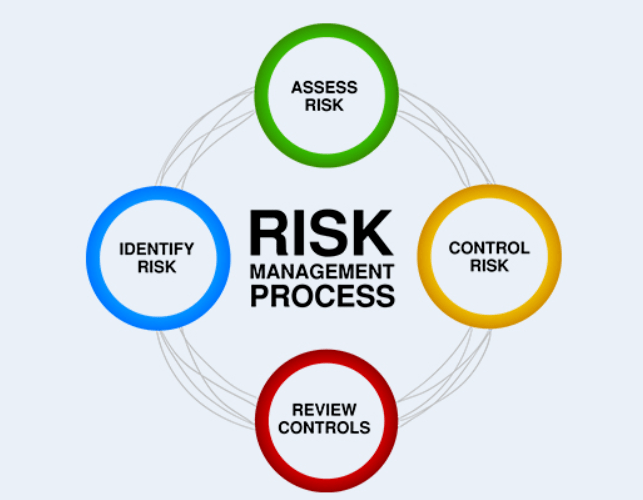
Image Credit: 🔗Risk Mitigation by Shane Howard

Welcome back to the professional student! Last week, I shared my experience living through Tropical Storm Helene in Western North Carolina and offered some insights into small business recovery from a community and economic development perspective.

When disaster strikes, small business owners have limited options:

  1. Rely on insurance (if you have it) to cover some losses.
  2. Seek small business recovery grants.
  3. Dip into personal savings.
  4. Borrow money from family or friends.
  5. Fundraise
  6. Take out a loan.
  7. Close up shop.

After speaking with several small business owners, I’ve noticed a common misconception: Many believe that state or federal aid will step in to save them at the same level as public entities. That simply isn’t the case. Here’s why:

As a small business owner, you are a private entity. Being a private entity means assuming 100% of the risk of operating your business.

While state and federal governments may allocate funds for small business recovery, those funds are limited and not guaranteed. Relying on them as your primary safety net is a mistake.

Risk Mitigation: Your Responsibility

Owning a business isn’t just about selling a product or service—it’s about managing risk to ensure long-term resilience.

Let me be crystal clear: As a small business owner, YOU assume 100% of the risk. Say it out loud. Repeat it until it sticks—before you even consider opening a business.

So, what is risk mitigation? In simple terms, it’s the process of reducing threats to your business and safeguarding its future. Effective risk mitigation means putting controls in place to minimize the impact of unforeseen events.

Your goal should be to reduce that 100% risk as much as possible. For example, a restaurant owner minimizes legal risk by adding a disclaimer to their menu about the dangers of consuming raw or undercooked food. If a customer insists on eating a nearly raw steak and gets sick, that disclaimer helps protect the business. Another key risk mitigation strategy is handling and storing perishable food properly to prevent foodborne illnesses. That is risk mitigation—taking proactive steps to prevent disaster.

Want to learn more about risk mitigation strategies? Click the link below:
🔗 Four Types of Risk Mitigation

The First Line of Defense: Insurance

I recently spoke with a business owner who lost critical equipment due to flooding. Desperate for solutions, they asked for help. My first question: “Have you filed an insurance claim?”

To my shock, they had no commercial insurance.

After digging deeper, I discovered North Carolina doesn’t require all business owners to carry commercial insurance. While that may be legal, it’s also a massive risk.

Would you drive a car without insurance? Some people might, but the smart answer is no. The same applies to running a business.

If you cannot afford to protect yourself, your employees, and your assets with a commercial insurance policy, you have no business opening a business. Say it again:

👉 I HAVE NO BUSINESS OPENING A BUSINESS IF I CAN’T PAY FOR A COMMERCIAL INSURANCE POLICY TO PROTECT MYSELF, MY EMPLOYEES, AND MY ASSETS.

It’s that simple. Risk management isn’t optional—it’s essential.

Insurance is a basic first line of defense. Stay tuned for part III when I dive even deeper into steps business owners can take to mitigate risk!

Thanks for stopping by The Professional Student. Don’t forget to like, share, and comment!

Categories
Uncategorized

Final Thoughts: Americana A 400-Year History of American Capitalism by Bhu Srinivasan

Welcome back to The Professional Student! Today, I would like to take some time just to reflect on the previous 6 blogs. I don’t think I knew what I was getting into with the book I chose to do my reflection posts on, but I am a history fan.

History is one of those things that I love to study, especially food history. Many major brands still in existence can be traced back to the early 1900s when food manufacturing was starting to take off. Henry Ford pioneered the assembly line and the McDonald brothers were able to take what Ford did and apply it to their fast food model after they got out of the bbq business and switched over to what we know them for; burgers. McDonald’s still makes fast food, but in actuality, they’re a real estate firm. Franchisees might own the business, but corporate owns the land.

Wars are another area that I enjoy studying, having served myself and having a father (Vietnam), a grandfather (WWII), and a great-grandfather (WWI) who served. More recently, my nephew became a Marine about a year ago, so there is a family history of military service. Aside from the historical significance of historic wars, they cost money and they can make money. I can speak from my own personal experience having been in charge of running food service operations at smaller bases with about 150 personal eating three meals a day plus drinks, snacks, water, produce, etc., the cost is astronomical. I easily spent $15,000 to $25,000+ per week on food orders. Fast forward a full year and that number can reach or exceed $1,000,000.

Reading Americana, A 400-Year History of American Capitalism made me look at everything historically I already knew from a different perspective; the perspective of the dollar. Pilgrims made the journey over on The Mayflower chartered by The Virginia Company seeking religious freedom, which they got in exchange for 7 years of service loading ships up with goods to be sold for profit in Great Britain. Unfortunately for the Virginia Company, there were not able to stay in business to ever reap any fruits of their labor.

What is bad for one company is good for another, and the pilgrims were able to capitalize on tobacco and cotton, among other things, to turn a profit. So, while religious freedom might be the first founding principle of The United States, capitalism comes in for a strong second.

With that being said, no system is perfect. Is it capitalism to blame, the government, consumerism, or the tax code? Or, is it the devil in people that gets the best of us when blinded by prospects of amassing huge fortunes and wealth? Perhaps a combination of all. At the end of the day, money must be spent to make more. You can’t take it with you and a person only needs so much.

I will let you think about capitalism and what it means to you and end here. What is the future of the United States? Will the wealth gap keep getting larger? Will the American Dream disappear? Will we uplift each other as a society, or let those who can’t swim sink and drown? Will equality be achieved for everyone in the land of the free. Free until you don’t pay your income taxes, of course. Free so that the money you’re left with after taxes can continually get taxed over and over again until there is nothing left but fat pockets for some and empty pockets for others.

Categories
Uncategorized

First Thoughts: Americana, A 400-Year History of American Capitalism By Bhu Srinivasan

Hello, and welcome back to The Professional Student! I’ve been slightly absent from posting as life has been busy, but that is about to change. In the third course of my Master of Entrepreneurship in Innovation Leadership and Entrepreneurship program at WCU, Entrepreneurial Feasibility Analysis, students have been tasked with a book reflection assignment.

The book I’ve chosen, Americana, A 400-Year History of American Capitalism, by Bhu Srinivasan, is written from the author’s perspective as a young child who immigrated to the United States from India. As I began reading the book, one thing that jumped out to me during the introduction was that while the freedoms afforded to the citizens of the United States are nice, the reason why people decide to make a move is to take advantage of the many different ways and opportunities there are to make money.

Bhu describes his childhood living in India during the 80s with his parents, who both had college educations, and he recalls the fact that his family did not have a car. They couldn’t afford it despite his parent’s education and jobs. Having a car, which is something almost every American household has, wasn’t possible. However, they could afford a new refrigerator, which was delivered to their house on a cart pulled by an ox.

Reading and learning about Bhu’s upbringing in India makes me appreciate what most Americans take for granted, such as owning a car, internet access, utilities, smartphones, etc. Many things considered normal are actually luxuries, and I have always had this mentality. Anything extra beyond basic living necessities is a luxury, and self reflecting on that statement can do everyone some good during this difficult time of inflated costs. I didn’t grow up with cable television, internet access at home, or a cell phone. Entertainment was found outside, and I am grateful having been raised as probably one of the last generations to experience life before technology took over.

I clearly remember the day I purchased my first cellphone at almost 20. I was at Fort Lee, Virginia, learning my job skills for the Army. Camera phones had just come out, and it was a Samsung flip phone. I enjoyed it until it got taken away by a Drill Sergeant because I wasn’t supposed to have it during part of my military training! A lot has changed, and I think the newer generation of military folks are allowed to have cell phones.

Thanks for stopping by The Professional Student. I hope you enjoyed the beginning of my book reflection, and please don’t forget to like, comment, or reblog.

References

Srinivasan, B. (2018). Americana: A 400-year history of American capitalism. Penguin Press.