Welcome back to the professional student! Last week, I shared my experience living through Tropical Storm Helene in Western North Carolina and offered some insights into small business recovery from a community and economic development perspective.
When disaster strikes, small business owners have limited options:
Rely on insurance (if you have it) to cover some losses.
Seek small business recovery grants.
Dip into personal savings.
Borrow money from family or friends.
Fundraise
Take out a loan.
Close up shop.
After speaking with several small business owners, I’ve noticed a common misconception: Many believe that state or federal aid will step in to save them at the same level as public entities. That simply isn’t the case. Here’s why:
As a small business owner, you are a private entity. Being a private entity means assuming 100% of the risk of operating your business.
While state and federal governments may allocate funds for small business recovery, those funds are limited and not guaranteed. Relying on them as your primary safety net is a mistake.
Risk Mitigation: Your Responsibility
Owning a business isn’t just about selling a product or service—it’s about managing risk to ensure long-term resilience.
Let me be crystal clear: As a small business owner, YOU assume 100% of the risk. Say it out loud. Repeat it until it sticks—before you even consider opening a business.
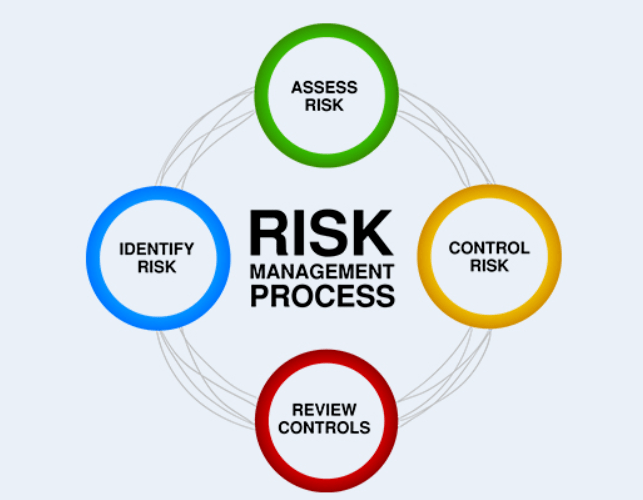
So, what is risk mitigation? In simple terms, it’s the process of reducing threats to your business and safeguarding its future. Effective risk mitigation means putting controls in place to minimize the impact of unforeseen events.
Your goal should be to reduce that 100% risk as much as possible. For example, a restaurant owner minimizes legal risk by adding a disclaimer to their menu about the dangers of consuming raw or undercooked food. If a customer insists on eating a nearly raw steak and gets sick, that disclaimer helps protect the business. Another key risk mitigation strategy is handling and storing perishable food properly to prevent foodborne illnesses. That is risk mitigation—taking proactive steps to prevent disaster.
I recently spoke with a business owner who lost critical equipment due to flooding. Desperate for solutions, they asked for help. My first question: “Have you filed an insurance claim?”
To my shock, they had no commercial insurance.
After digging deeper, I discovered North Carolina doesn’t require all business owners to carry commercial insurance. While that may be legal, it’s also a massive risk.
Would you drive a car without insurance? Some people might, but the smart answer is no. The same applies to running a business.
If you cannot afford to protect yourself, your employees, and your assets with a commercial insurance policy, you have no business opening a business. Say it again:
👉 I HAVE NO BUSINESS OPENING A BUSINESS IF I CAN’T PAY FOR A COMMERCIAL INSURANCE POLICY TO PROTECT MYSELF, MY EMPLOYEES, AND MY ASSETS.
It’s that simple. Risk management isn’t optional—it’s essential.
Insurance is a basic first line of defense. Stay tuned for part III when I dive even deeper into steps business owners can take to mitigate risk!
Thanks for stopping by The Professional Student. Don’t forget to like, share, and comment!
As a resident of Western North Carolina (WNC) working in community and economic development, I have come to know and understand the many unique challenges that both residents and small businesses face, such as the land and unique mountainous terrain, the price and lack of affordable housing, the lack of childcare and affordable childcare, and the cost of living to name a few. I acknowledge that many of these challenges are not unique to WNC and can be universally applied to the country.
So, let me try to paint you a picture of WNC. Most of it is rural, with small populations in each county and municipality that heavily rely on small businesses and tourism to support local economies.
Regardless of the size of some communities, 45% of North Carolina’s GDP comes from Western North Carolina (OSBM Helene Damage Assessment), and 99.6% of North Carolina’s GDP comes from small business owners.
The months of September and October are classified as “peak leaf season,” as many tourists flock to the area to witness the spectacular seasonal change of the trees that fills mountains and hillsides with bright colors of yellow, orange, and red. These tourists typically provide small business owners with about 30% of their annual revenue, enough to sustain them during the slower winter months until tourism picks up again during the spring. There is much more relevance to this, and I’ll get into it further.
The median income is below the state’s median income of $68,610, and we have a higher population of seniors than the state, requiring a high level of care. For more in-depth details, please feel free to explore this county profile map put together by the NC Rural Center: https://www.ncruralcenter.org/county-data/
Thinking back to late September of 2024, I don’t think anyone could have predicted the magnitude or the impact that Tropical Storm (TS) Helene would have in our region.
I was extremely fortunate, thankful, and grateful to have escaped the storm with no damage other than food loss. Thinking back to that day, I recall being home on Friday, September 27, and the power went out at about 8:00 am. Many parts of Western North Carolina had already received 6-10 inches of rain the day before the implications of TS Helene, which set the stage for the disastrous events that followed. The ground became over-saturated with water from a different storm system the day before, and the surrounding bodies of water had already risen or flooded.
I was calm when the power went out. I thought I was prepared and ready. I was not. No one was. No amount of warning could have prepared the citizens of the disaster-declared counties for what was to come. Shortly after the power went out, all cell phone communication was lost, and there was no internet access. I was in the dark, literally and figuratively. Having no idea what was happening and inability to find out sent me into panic mode. I made preparations to leave until it was suitable to come back, which ended up being almost 3 weeks later when the electricity was restored.
I remember waking up early on Saturday, loading my car, and heading out into the unknown. A typical 3-hour drive took almost 6 hours, and I had to drive well over 120 miles before I could get a glimmer of cell phone reception. Every small town that I drove through was also without electricity. Homes were ravaged and destroyed, and I witnessed the entire River Arts District underwater while driving out of Asheville. I saw homes and vehicles with trees lying across them. I saw a whole section of the interstate closed from a mudslide in Black Mountain, which caused a reroute from 70 to 26 for myself and many others trying to leave the city. I saw people, blanked-faced, wandering the streets in a state of panic and confusion, trying to figure out where to go or what to do. It was the equivalent of the zombie apocalypse minus the zombies. I don’t know how else to explain it.
I watched the chaos unfold from afar and kept my neighbors and friends up-to-date as much as I could via text messages who had chosen to stay in their homes but did not have internet access. Leaving my home left me with a feeling of guilt, but I soon realized that I was one less person in the area to take away from the resources that were desperately needed by those who had lost everything.
WNC communities and small businesses were and are still recovering from TS Fred, in addition to small businesses recovering from the COVID-19 global pandemic before TS Helene hit. Most of Fred’s public recovery efforts have been wrapped into the scope of TS Helene’s recovery efforts. Public recovery is a challenge but not the same as private business recovery.
Private business recovery differs significantly from public recovery because business owners assume 100% of the risk. There are few options for small business owners (SBOs) outside of loans or grants (if they can find any). Many SBOs are still paying off loans that supported them throughout the pandemic and cannot borrow more money regardless of the low interest rates offered by the Small Business Administration.
So, what was the first problem? As I said before, small businesses earn approximately 30% of their annual revenue during September and October, peak leaf season. The revenue earned during peak leaf season carries SBOs to spring when tourism picks up again. Just because communities were located in disaster-declared counties does not equate to them being closed for business. They had the capacity to handle economic activities derived from tourism.
I understand the implications that were caused to all of the roads in Western North Carolina and the need for roadways to be free for emergency responders and trucks bringing in aid. Still, at the same time, small, rural, distressed communities that were not impacted or minimally impacted that could host tourists were unintentionally crippled through the actions of the former Governor. The intentions were good, but the delivery was terrible and should have been much more precise regarding what was closed to tourism and who was open.
So, let’s say a business owner filed an insurance claim, and like most insurance claims, there was a partial or complete denial. Now, the business owner turns to the SBA, and there is no money. What are they supposed to do? The harsh reality is that many had to close their shops, pack up, and leave the state. Their employees and the owners are out of work, the local economy is affected, and the entirety of North Carolina is affected.
Thanks for stopping by The Professional Student! Part 2 will follow shortly, but please let me know your thoughts, especially if you’re a local resident of Western North Carolina.
French macarons made by Pastry Chef Shawn Smallwood
French macarons frustrated me as a pastry student 10 years ago when I first began attending Le Cordon Bleu in Dallas, Texas. There is a reason why good French macarons are so expensive. If you’ve never had one, please try one. You won’t regret it!
A love-hate relationship was quickly established, as I loved to eat macarons but hated making them. I forgot about them until I was forced to master them. It was a lot of trial and error, but as an entrepreneur with an entrepreneurial mindset, I persisted nonetheless.
I wanted to share my technique and recipe, and I hope you find both useful, as I have spent a lot of time perfecting these little beauties. If you have ever made a meringue or a meringue-based dessert, you’ll understand just how finicky meringue anything can be.
Please watch my French Macaron tutorial before attempting to make macarons if you are inexperienced and new to baking them.
French Macaron Tutorial
Baking times might vary slightly on what is in the recipe that I typed up vs. what is in my video, as every oven is different. I’ve baked my macarons using how my oven bakes. You might need to increase or possibly decrease your oven baking time, so there might be a little trial and error until you have your macarons mastered.
French macarons baked by Pastry Chef Shawn Smallwood
Most importantly, have fun! It’s okay to mess up batches. Trial and error is part of the process, but believe in yourself, and don’t give up. Get creative with the French Macarons, as decorating is limited to your imagination. Below are some of my favorite French macarons I’ve ever baked.
French macarons made by Pastry Chef Shawn Smallwood
Thanks for stopping by for another baking edition from The Professional Student. Please help support me and my blogging endeavors by subscribing, commenting, liking, sharing, or re-blogging. Thanks again, and have a great day!
Welcome back to The Professional Student! Today, I’m just sharing some of my own random thoughts that don’t really have anything to do with school or baking.
I use my social media platforms to share my every day life, to help others, to teach, and to spread the knowledge that I have acquired over the years. It’s a place of positivity for me. It’s a place to build community and to spread joy and love. I also use it to keep in contact with people I’ve met over the years across the world when I was in the Army.
I wish I could say that my social media accounts were perfect, but I am not perfect, and they reflect as such. A lot of people only portray the good sides of life on social media, which can kind of come off fake or not genuine. It’s hard to build connections with people when everything seems like it’s going perfectly. We all have problems and it helps establish commonalities that are relatable.
I’ve also used social media for business transactions and I’ve been able to monetize off of my Facebook for posting videos and reels. I’ve made specific pages and groups dedicated to my baking, where clients can go and reach out to me or see my work at any time.
More recently, I’ve been focused on my TikTok and growing that account. It’s currently my largest social media account at almost 2,500 followers behind my Instagram and a little over 2,000.
While I’ve been posting my content to TikTok, I’ve also been posting it to YouTube. YouTube has created a space for me to categorize my videos and make them easy for people to find rather than scroll through my TikTok to find a particular cooking video. I could also share my YouTube videos to my Facebook and here to my blog. It helps put all of the pieces together by demonstrating the processes that I am going through as not everybody learns the same. Some folks and visual learners, hands-on, listeners, or a combination of all.
I was very active on Instagram for a long time, but I kind of forgot about it as I maneuvered over to TikTok. I’ve started posting there again, but the most important thing that I’ve realized is not all content is good to cross post. I was posting my TikToks to Instagram since you can share videos and reels there. However, the main purpose of Instagram is photo sharing, so I’ve shifted back to that.
Ultimately, I try and break down everything that I know into an easy and understandable format. Then my followers can replicate a similar product at home or have a starting idea to make their own variations.
I also have a LinkedIn as well as a Threads. Whatever I post here is posted directly to my LinkedIn. It’s also a way to keep in touch with people and see what’s going on in their professional world. I also get to feature my unique professional skills, experiences, and abilities.
I don’t particularly go out of my way to make social media content. I share pieces of my everyday life that are useful or helpful. I kind of think of it like a product. Would you buy something that doesn’t help you? Would you buy something that doesn’t make your life easier? The answer is probably no.
I don’t expect people to watch content that is not useful, so I only make useful content. Some might consider it boring while others find it to be amazing and helpful. I have had many folks tell me how much they appreciate what I share and that they can watch my videos with their children, who enjoy learning how to cook. I get to help other people by sharing bits and pieces of my life and that is the best reward out of it all.
Thanks for stopping by and don’t forget to give me a like, follow, or re-blog! 
Ricotta cheese is one of the rare items I purchase at the grocery store, but I do need it occasionally. Sometimes, for savory applications like ravioli or lasagna, other times for desserts!
I was asked to make an Italian-inspired dessert for a client on this particular day. We discussed various ideas and settled on a cannoli-inspired cake. Cannoli filling is made from ricotta, powdered sugar, vanilla, cinnamon, and chocolate chips. The cake would have four pistachio cake layers and three cannoli filling layers. The outside would be frosted with a buttercream comprised of half cream cheese and half Italian meringue, and finished off with a dark chocolate ganache top, marbled dark chocolate ganache sides, crushed pistachios on top, and a chocolate chip boarder around the bottom.
I noticed no ricotta at the grocery store but plenty of whole milk. I didn’t have time to look for one item, so I grabbed the milk and headed home to make it. The process is simple enough but a little time-consuming when it comes to removing the whey from the cheese. It is well worth it, as the texture and flavor are superior to any grocery store product.
Please enjoy learning to make ricotta cheese with me, as I demonstrate in the YouTube video below. You can also pick up a few gardening tips along the way!
Making Ricotta Cheese Demo
After making the cheese, I needed to bake off the pistachio cakes and turn the ricotta into cannoli filling. Please enjoy the YouTube video of that process. It also includes the recipe I used for the pistachio cake.
Pistachio Cake and Cannoli Filling Demo
Finally, my cake layers had cooled, and it was time to torte, fill, stack, and build the final cake. Depending on thickness, it always takes a few hours for cake layers to cool off, but I don’t mind. It gives me time to work on the homework side of my graduate program!
I’ve noticed some bakers prefer to bake their layers individually so they do not have to cut them. This is a big pet peeve of mine because I do not like thick cake layers. I’ve met people who do not like cake. I truly believe it is because they’ve never actually had a good one. Cake layers should be thin. If the layers are too big and the filling is too thin, the result can be a dry and unpleasant cake. One should not require a large glass of milk, even though it is good with dessert, to prevent a cake choking hazard.
Please enjoy the cannoli cake stacking, filling, and decorating process in the YouTube video below.
Filling and Staking Cake Demo
Thanks for stopping by The Professional Student, and don’t forget to like, re-blog, and comment!
Hello, and welcome back to the Professional Student! This week, I’ll be examining outdoor advertisements. Not to be confused with advertisements for the outdoors, outdoor advertisements are those that are outdoors, like a billboard.
I always like to start out by listing the criteria for the analysis, just in case you’re new here!
The deliverables are composed of 5 different sections listed in the following order (Lahm & Lockwood, 2022):
Describe the advertisement by product/service, company, brand, etc., and the focus. What was the appeal or technique that was used to evoke an emotional response? Include a link to the ad selected.
What were the objectives of the campaign? To sell more? To inform customers about a new product feature? Were the objectives attainable and measurable, or were they time-specific?
Describe the target market that was the focus of the advertisement.
What action does the advertisement want the audience to take? If action is taken, how will the audience member benefit from using the product?
Describe the value proposition of the product or service being offered in each advertisement. What are the specific reasons (product features and benefits) that would drive customers to purchase the product or service being sold in each advertisement?
1. The Marlboro Man Billboard
I wanted to start this off with something I remember seeing constantly as a child: cigarette advertisements on billboards (which are now banned as of 1999). A link to the advertisement is below. Marlboro is owned by Philip Morris USA.
For me, seeing the Marlboro Man is iconic, as he was an icon in his own right. The billboard features the Marlboro Man on a horse in a blue denim shirt, tan jeans, a cowboy hat, gloves, and a rope for rounding up animals. He has a cigarette hanging out of his mouth and faces in a side view profile. It brings back memories of seeing these advertisements everywhere as a child. My first thought was that I couldn’t imagine how difficult it would be to smoke and ride a horse while rounding up animals, but hey, it’s the Marlboro Man. Aside from Chuck Norris, he can do anything! He is a rugged, manly man who smokes red, so if you’re a rugged, manly man, you should smoke them, too (value proposition)!
Obviously, the purpose of this advertisement is to sell Marlboro cigarettes. The billboard is from 1982 and was featured on the Sunset Strip in Los Angeles. Before 1950, Marlboro cigarettes were advertised to women only, but that changed with the introduction of the Marlboro Man, who was always featured smoking Marlboro Reds. Marlboro Reds used to have a red filter to hide lipstick stains, but they failed to attract women. So, they slapped a brown filter on it, complete with a cowboy (the Marlboro Man), and marketed it to men.
A 1982 article in The New York Times by Eric Pace discusses the price of cigarettes jolting up from about 20 cents per pack to 82 cents per pack. I am not a smoker anymore, but I smoked for 10 years during my time in the Army. I can recall a time when a pack of cigarettes was almost $10, depending on where you were in the country, as some states have higher prices than others.
Another New York Times article by Phillip Wiggins in 1982 highlights that Philip Morris is the second-largest tobacco country after R.J. Reynolds Industries. Operating revenues in 1982 were 10.89 billion, with a profit of 676.2 million.
2. Sheets Energy Strips, “I TAKE A SHEET.”
My second advertisement isn’t exactly the greatest or something considered great advertising, but it made me laugh hysterically because of how ridiculous it is. What it is, though, is a great failure, and as such, it deserves to be revisited. I can’t believe a company’s marketing team thought this was a good idea! I must highlight this as a failure because this is exactly what you should not do!
PureBrand owns Sheets Energy Strips. These energy strips essentially dissolve on your tongue to give you energy. I can’t help but see the resemblance to dropping acid. Not that I’ve ever dropped acid (I haven’t), but I am not ignorant of the fact of what it is, either. We’ve all studied psychology, and the 70s were wild. The box of energy strips features a face with only a mouth and a tongue sticking out with a hand, placing an energy strip onto the tongue that looks exactly like dropping acid. I bet the kids loved this! I can’t find Sheets Energy Strips for sale, but there are plenty of other brands being marketed as dietary supplements. They’re insanely expensive on Amazon.com, ranging from $20-$30 for one box containing 30 strips. Honestly, just buy a case of energy drinks if you’ll pay $30 for that!
Let’s get to the juicy part: the advertisements! Below is a link so you can see them.
There are two featured on that webpage. The first is a woman in a bathing suit with a big smile on her face. She has a swimming cap on and goggles as if she is about to compete competitively, even though it’s a casual pool you would find at a hotel or apartment complex. Athletes use a lot of energy, so maybe that’s their target market for the ad. Here is where it goes wrong. In big, bold white words across the woman, it says, “I TAKE A SHEET IN THE POOL.” First of all, no, you don’t! This isn’t Caddy Shack. No one is throwing a Snickers bar into the pool. They were trying to be funny, but it comes off as crude. I find it hysterical. Not at the words but at the fact that this was publicly advertised on the side of a bus stop and billboards. Next to that, there is a professional woman. A student, a professor, a bookworm, perhaps? She is dressed in a black suit with glasses and looks conservative. She has a slight grin on her face while holding a stack of books. There is also a wedding ring on her hand. Like ad 1, it says in bold white letters, “I TAKE A SHEET AT THE LIBRARY.” It must have been all the Starbucks working its magic. Okay, back to the seriousness. I really can’t believe this was an ad campaign! This obviously targets students and professionals alike, who have very busy schedules and might need an extra energy boost.
According to CSP Daily News (2011), PureBrands spent $10 million on advertising and partnered up with athletes and celebrities alike, such as Pitbull and LeBron James. According to the SEC, PureBrands took a net loss of $21,094,983 in 2012 and $12,583,216 in 2013.
3. Surreal Cereal
Surreal Cereal is a plant-based based high protein, low carb, zero sugar cereal that is “Surreal because it shouldn’t work, but it does, brilliantly.” Surreal is owned by Jac Chetland and Kit Cammell, two British entrepreneurs reinventing the breakfast game by making a nutritionally balanced cereal that tastes great for adults. I can’t find this product for sale in the US, but on Amazon’s UK page, I found a variety pack of 4 for 24 British Pounds.
The specific advertisement I’ve decided to look at is called “No Work January” and can be seen in the link below.
There is an all-white background that reads: January. Protein. Whatever. Can’t be bothered this month? Neither can we. Whatever is written in rainbow words. Next to the words are cereal boxes, and on the bottom right hand, the word “SURREAL” is printed in bold black letters.
I think this advertisement is clever, as many people are trying to drop holiday weight as their New Year’s resolution. The message, can’t be bothered this month? You don’t have to be with our cereal. Just eat it. The target market segments are adults who want to eat healthy, eat good, and not think about it. People who live active lifestyles or those who are athletic are also a great market. Folks who are looking to improve their health is another market segment.
Regarding the financial information, the company is registered as a private limited company in London, England.
4. okcupid, DTF
Okcupid, an online dating site, is owned by Match Group, which also owns Tinder, Hinge, Plenty of Fish, and other dating apps and sites.
The billboard advertisement I’ve chosen to analyze features two lovely ladies. Below is the link for the advertisement.
The first woman picked up her date and held her up in her arms sideways while her arms wrapped around her neck, holding a rose. The background is all baby pink and says “DTF” in big, bold yellow letters with a black shadow. Next to DTF it says “ALL HEAD OVER HEELS” bolded in black. The bottom of the billboard says okcupid, and below that, “DATING DESERVES BETTER” is printed in bold black letters.
I will not elaborate on the acronym DTF, but if you’ve watched The Jersey Shore, you know what comes to mind. However, okcupid took a play on DTF, and it doesn’t mean what you think it means here. DTF certainly grabs attention and gets a laugh, but in this ad campaign, DTF means down to thrift, down to furiously make out, down to flea market, etc. It is a way to connect to millennials and a modern audience.
I like the colors of the billboard. They’re bright. I like to see the LGBTQIA2S+ community being represented. Its modern, and it targets exactly who it was meant to target. Though millennials and modern people might have been the target, Gen Z can’t be discounted as they’re a much more accepting and open generation than previous generations.
Match Group has a net worth of $8.65 billion and a value of $11.63 billion (Stock Analysis, 2024). Love is a good business to be in! Match Group spent $519.6 million on advertising in 2023 and $447.9 million in 2022. In 2016, they spent $325 million but have steadily increased to spending an average of half a billion since 202 (Dixon, 2024).
5. Chipotle, “As Real As It Gets”
Am I the only one who thinks Chi-pot-le instead of Chipotle? It makes me laugh every time. I like Chipotle, but I don’t eat there often. It isn’t exactly something that comes to mind, and I find their food overly salty. Every bite I take slowly increases my blood pressure levels until my feet start to retain water and swell up. Chipotle is a publicly traded “Mexican Grill” quick service fast food restaurant owned by The Vanguard Group, which holds majority shares. Surprisingly, Chipotle is not franchised and is owned and operated by the corporation itself.
This advertisement is funny nonetheless and can be seen by clicking the link below.
The billboard features a burrito with some bites taken out of it, as the contents have spread out all over only what one can assume to be a table. You can see the foil wrapper slowly being peeled away, and next to the burrito, the words “REALEST WRAPPER IN THE GAME” appear in bold white letters against a grey “table” background. Below that, there is the Chipotle logo with the words “AS REAL AS IT GETS” in bold black letters.
This is obviously a play on words and a nod towards the music industry, specifically the rap music genre, where rap artists and musicians claim to be unchanged by their fame and money as they’re “the realist of the real” rapping about real life, real situations, or their own personal stories. The billboard made me smile, but it didn’t make me want to eat a burrito, which appears to be what is being sold. A real burrito, of course, not those fake burritos sold elsewhere.
According to Google Finance (2024), Chipotle is valued at $79.74 billion and had revenues of $2.52 billion in 2023. Chipotle spent a quarter of a million dollars on advertising in 2022 and $264.09 million in 2023.
Thanks for stopping by The Professional Student. Don’t forget to leave me a comment!
Lahm, R., Lockwood, F. (2022). ENT 610 Entrepreneurial Creation. Master of Entrepreneurship Degree Program: “Greatest Marketing Campaigns” Analysis.https://www.canvas.com
Welcome back to The Professional Student. Graduate students at Western Carolina University studying innovative leadership and entrepreneurship were challenged to conduct a 5 Forces Analysis. Please enjoy the video below of the 5 Forces Analysis on Subway Sandwiches.
Thanks for stopping by, and don’t forget to leave me a comment!
Welcome back, everyone! I’ve been playing with the layout of my blog, and I’ve added a menu bar on the side of my homepage with a “baking” section. I figured it might be helpful to start posting some of my work there, as I would like to showcase and feature some of my other talents outside of graduate school coursework.
At 18 years old, I began my professional cooking career in the Army. Army cooking taught me fantastic time management skills and how to cook large quantities in a short amount of time. I held various positions in the kitchen, including head baker. After being honorably discharged, I attended Le Cordon Bleu in Dallas, Texas, and graduated with a 4.0 GPA, earning an AAS in patisserie and baking. After graduation, I left Dallas and moved to Asheville, North Carolina, to work as a lead pastry cook at The Biltmore Estate for almost five years. Like many service industry workers, I found myself suddenly unemployed due to the pandemic and ventured out alone.
I started the company during the COVID-19 pandemic, and it was a great way to work from home while going to school at the same time. I had not transferred to Western Carolina University yet and had more free time to spend on baking. I operated the company for two years. When I began my studies at Western, I needed more time. I decided to shut down operations and move forward with education as my main priority. I still bake on the side for customers, but now, it’s a fun hobby I enjoy as a creative outlet!
I think the best way to showcase some of my work is by sharing a link to the Instagram account I used for my custom-made dessert company, Custom Goods LLC. The business is no longer active, and I’ve since closed it down, but I keep the Instagram page up to share my work with others. Here is the link to the Instagram page. Please enjoy my work and feel free to comment or ask questions. Thank you!
For this assignment, graduate students at Western Carolina University in the Innovative Leadership and Entrepreneurship program were challenged to visit a PR firm, advertising agency, or other marketing services firms to create a publicly available audio or video presentation. Alternative options include writing an essay based on research or creating a digital tour for a professional marketing firm.
I decided to visit a local PR firm, Darby Communications, in Asheville, North Carolina, and make a video presentation. The firm is owned by another student in my cohort, Coral Darby. Coral was kind enough to grant me access to her business and her amazing staff. Everyone at Darby Communications was so kind and I appreciate the time everyone gave me. Thank you Coral, Mindy, Suzanne, Lysianne, Stacy, and Angie!
Coral, along with all the interviewees, have given their written consent to have their interviews publicly released. Consent forms have been uploaded online to the university portal in accordance with Western Carolina University policies and procedures.
Please take an opportunity to check out Darby Communications in the link provided below:
I hope you enjoy my video presentation, which you can access at the link below, and I look forward to reading your comments and feedback. Thanks for stopping by, and I hope everyone is enjoying The Professional Student!






 Innovative Leadership and Entrepreneurship: From Grad Student to Graduated
You must be logged in to post a comment.